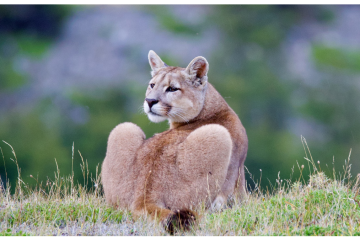
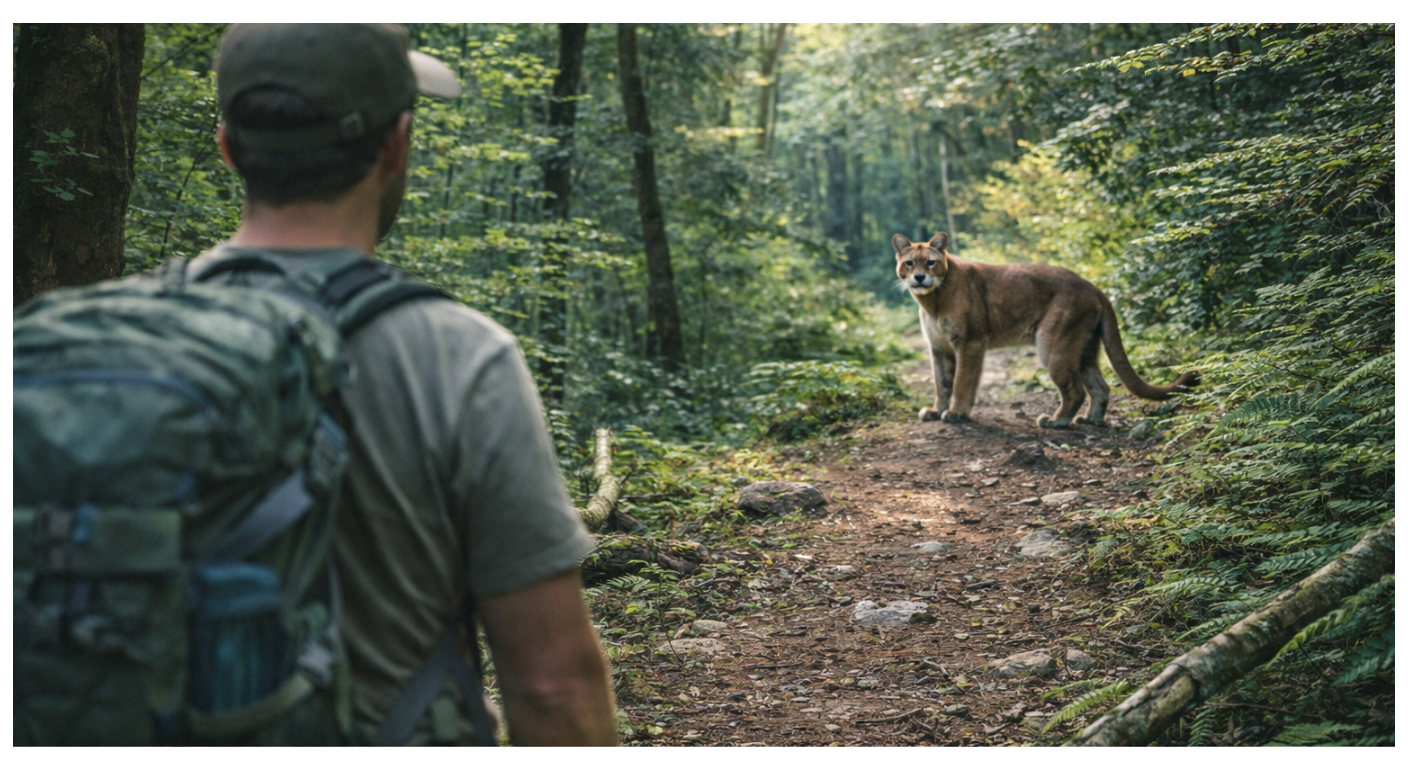
Fear of mountain lions is one of the most common anxieties among hikers, especially those who venture into remote trails, forested terrain, or mountainous regions. The idea of an unseen predator silent, powerful, and capable of killing large prey can feel overwhelming, particularly when hiking alone or at dusk. While this fear is understandable, the actual risk of a mountain lion attack is far lower than most people assume. Understanding the animal’s behavior, the real statistics, and proper safety responses can help hikers replace fear with informed awareness.
Table of Contents
What Mountain Lions Are and Where Hikers Encounter Them
Cougar, Puma, Panther: Different Names, Same Animal
Mountain lions are known by many names—cougar, puma, panther, and catamount but they all refer to the same species (Puma concolor). It is the largest wild cat in North America and one of the most widely distributed mammals on the continent.
Habitat and Trail Overlap
Mountain lions inhabit forests, deserts, mountain ranges, and canyon systems wherever sufficient prey—mainly deer—exists. Many popular hiking areas overlap with this habitat, particularly in western U.S. states such as California, Colorado, Utah, and Arizona.
Size and Physical Capabilities
An adult mountain lion can measure up to eight feet long, including the tail, and weigh between 65 and 150 pounds or more. They are capable of sprinting at high speeds and leaping long distances, making them efficient ambush predators—but not habitual attackers of humans.
How Real Is the Risk to Hikers?
Attack Statistics in Perspective
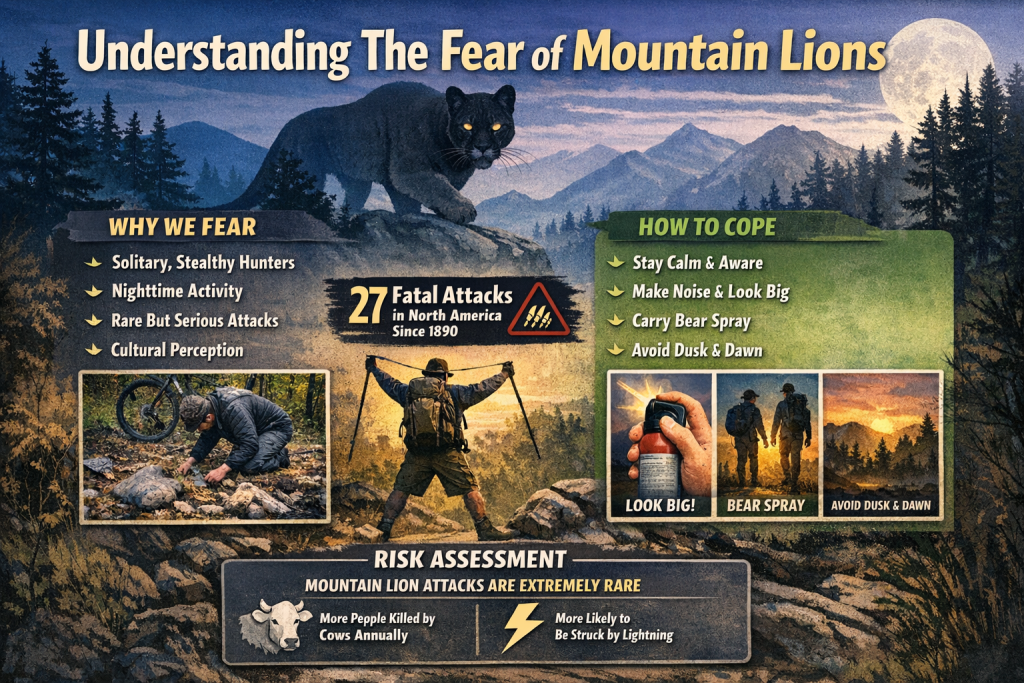
Mountain lion attacks on humans are extremely rare. Over more than a century, only a small number of fatal attacks have been documented in North America. Even in states with healthy mountain lion populations, such incidents remain uncommon compared to other outdoor risks.
Why Attacks Are So Rare
Humans are not natural prey for mountain lions. Their evolutionary hunting strategy is adapted for deer and other ungulates. Most lions avoid people altogether and will retreat when they detect human presence.
When Risk Increases
Though rare, attacks are more likely under specific conditions:
- The hiker is running or cycling, triggering chase instincts
- Children or pets are present and appear as smaller prey
- The lion is young, injured, starving, or defending kittens
- The encounter occurs at dawn or dusk in low-visibility terrain
Mountain Lion Encounters: Risk vs Reality
| Situation | Actual Risk Level | Explanation |
|---|---|---|
| Daytime hiking on popular trails | Very Low | Mountain lions avoid busy areas with frequent human activity |
| Hiking alone at dawn or dusk | Low to Moderate | Lions are more active during low-light hours |
| Hiking with children or pets | Moderate | Small, fast-moving figures can attract attention |
| Running or trail cycling | Higher (still rare) | Sudden movement may trigger chase instinct |
| Making noise while hiking | Very Low | Noise alerts lions and reduces surprise encounters |
| Encountering a mountain lion | Rare | Most lions retreat without confrontation |
Why the Fear Feels Stronger Than the Reality
The Psychology of Predators
Human fear of large carnivores is deeply rooted in survival instincts. The idea of being stalked—often without seeing the animal—creates anxiety disproportionate to actual risk.
Night Hiking and Low Visibility
Fear intensifies at night or during early morning and evening hours when mountain lions are more active. Reduced visibility allows imagination to fill the gaps, even when no animal is present.
Media Coverage and Rare Events
Because mountain lion attacks are so unusual, they receive intense media attention when they do occur. This creates a perception that such incidents are common, despite the statistical evidence showing otherwise.
How to Reduce Fear Before You Hit the Trail
Learn Mountain Lion Behavior
Knowledge reduces fear. Mountain lions prefer to avoid confrontation and usually leave an area once they detect humans. Understanding this behavior helps hikers interpret their surroundings more calmly.
Plan and Prepare
- Hike in groups when possible
- Let someone know your route and return time
- Avoid hiking alone at dawn or dusk in high-lion areas
- Stay alert and avoid wearing headphones
Carry Safety Tools for Peace of Mind
Some hikers carry bear spray, whistles, or air horns. While attacks are unlikely, these tools can provide confidence and a sense of control in unfamiliar terrain.
What to Do If You See a Mountain Lion
Do Not Run
Running can trigger a lion’s instinct to chase. Instead, stop, remain facing the animal, and maintain eye contact.
Make Yourself Look Larger
Raise your arms, open your jacket, lift trekking poles, or hold your backpack overhead. Speak loudly and firmly to assert your presence.
Back Away Slowly
Create distance without turning your back. Give the lion an escape route and avoid cornering it.
What to Do If a Mountain Lion Approaches or Attacks
Use Deterrents
Throw rocks or sticks if necessary, aiming near—not directly at—the animal to discourage approach.
Fight Back If Attacked
In the extremely rare case of an attack, fight aggressively. Protect your head and neck and use any available object. Survivors consistently report that resistance can cause the lion to disengage.
Protect Children and Pets
Pick up children immediately and keep pets leashed and close. Small, fast-moving animals are more likely to be perceived as prey.
Final Thoughts: Awareness Over Fear
Fear of mountain lions while hiking is natural, but fear alone should not dictate outdoor choices. Mountain lions are powerful, intelligent animals that overwhelmingly prefer to avoid humans. By understanding real risks, recognizing behavior patterns, and knowing how to respond during an encounter, hikers can move through lion country with confidence rather than anxiety.
The wilderness always carries some risk—but informed awareness, not fear, is what keeps people safe on the trail.
Frequently Asked Questions
Q: Are Mountain Lions More Dangerous at Night?
A: They are more active during dawn and dusk, but attacks remain rare regardless of time. Visibility, not danger, is usually the bigger issue at night.
Q: Do Mountain Lions Stalk Humans?
A: They may observe humans out of curiosity, but prolonged stalking leading to attack is extremely uncommon.
Q: Should Fear Stop You From Hiking Alone?
A: Fear should encourage preparation, not avoidance. With awareness, planning, and knowledge, hiking in mountain lion territory is generally safe.