
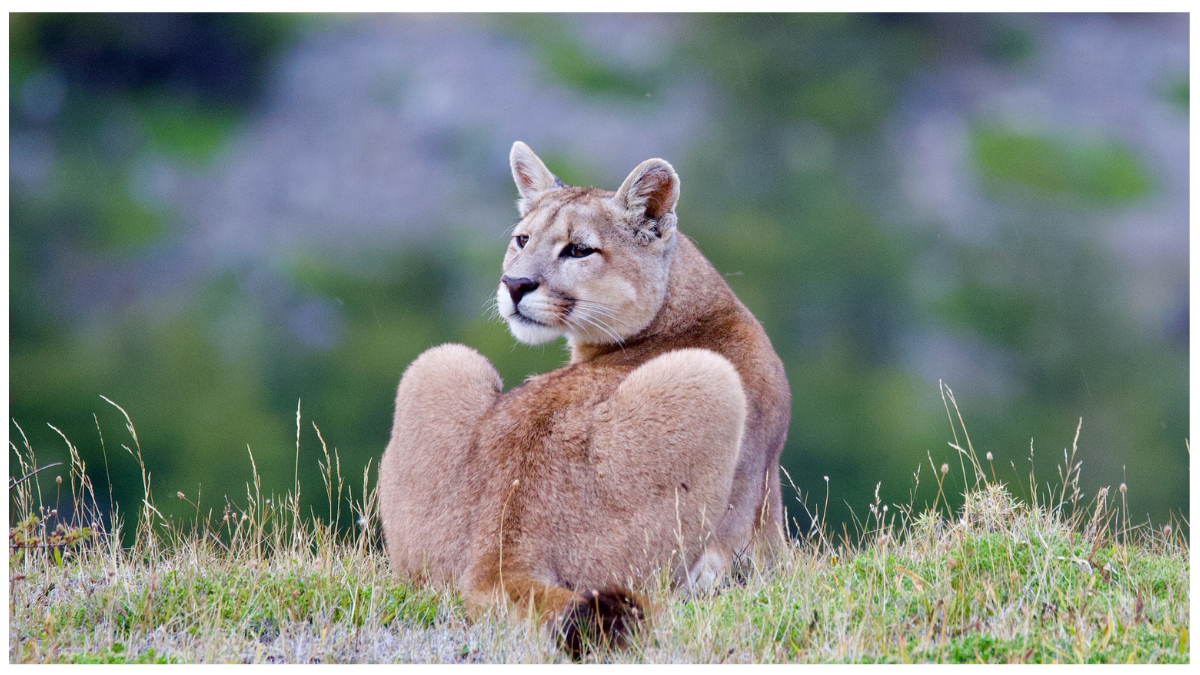
The mountain lion, also called cougar, puma, panther, or catamount, is one of the most widespread and iconic predators in the Americas. These agile, solitary cats play a key ecological role as apex predators but are rarely seen due to their secretive nature. This guide covers their biology, behavior, habitat, signs of presence and interactions with humans.
Biology and Identification
Physical Description
Mountain lions have a long, slender build optimized for stealth and power. Adult males can exceed 8 feet from nose to tail and females around 7 feet. Adults typically weigh between ~130–150 lbs, though weight varies by region and prey availability.
These cats have a tan to grayish coat, long hind legs, and a tail that can be nearly one‑third of their body length, all adaptations for stalking and leaping.
Names and Classification
The scientific name is Puma concolor, and unlike African lions (Panthera leo), mountain lions cannot roar; they communicate through purrs, hisses, growls, and other vocalizations. According to National Wildlife Federation
Cougar vs Mountain Lion
So, if you’ve ever wondered whether a cougar and a mountain lion are different animals… here’s the thing: they’re actually the same! Now, how do you tell them apart? Mostly, it’s just about the name. In some parts of North America, people say “mountain lion,” while in other areas you’ll hear “cougar.” It basically means the same powerful cat, Puma concolor, roaming forests, mountains, and deserts across the Americas. If I see a news report or a guide mentioning either name, I know they’re talking about the same animal. So next time someone asks, you can explain it easily!
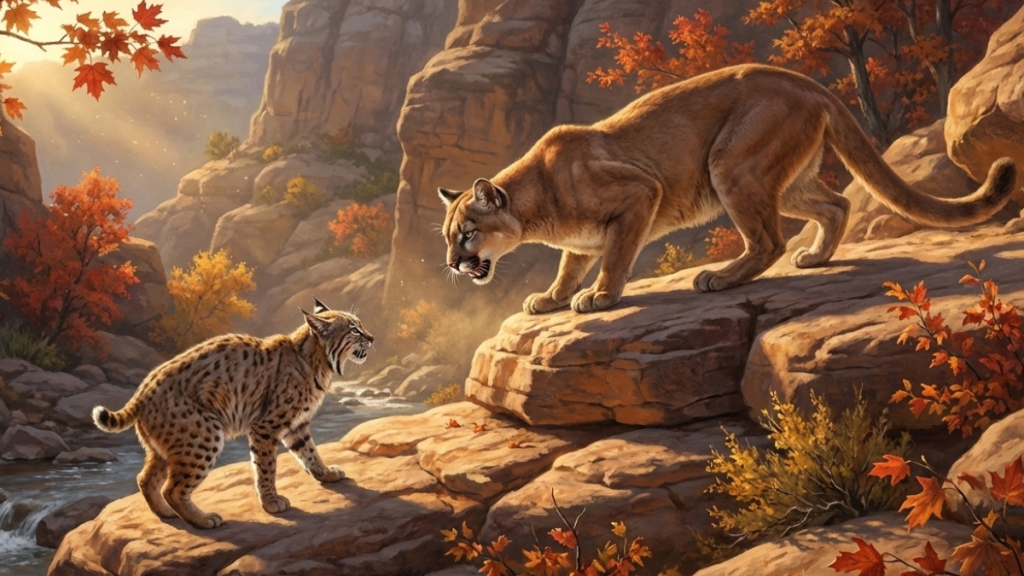
Mountain Lion vs Bobcat
Mountain lions are much larger than bobcats. While bobcats rarely exceed 30 lbs, mountain lions weigh many times more and have larger, more powerful limbs for ambush hunting — making them distinct both in appearance and ecological role.
Habitat and Range
Where Mountain Lions Live
Mountain lions have the widest range of any terrestrial mammal in the Western Hemisphere from Canada down to Chile.
In the U.S., they are mostly found in the western states, but occasional sightings occur farther east.
Preferred Habitats
They inhabit mountains, forests, deserts, grasslands, and foothills, usually where deer, their primary prey, are present. Mountain lions have also been spotted near human settlements, including backyards, as in the chilling video Mountain Lions Surround Colorado Home.
Distribution Across U.S. States
Here’s a breakdown of where mountain lions are known to live:
States with Established Populations
| State | Status |
|---|---|
| California | Stable & abundant |
| Colorado | Thousands, widespread |
| Arizona | Stable |
| Idaho | Stable |
| Montana | Stable |
| New Mexico | Stable |
| Oregon | Stable |
| South Dakota | Small population |
States with Occasional Sightings (No Established Population)
- Michigan – occasional sightings of transient animals.
- New York – occasional reports but no confirmed stable populations.
States with No Confirmed Populations
Many eastern and midwestern states — including Ohio, Pennsylvania, North Carolina, Tennessee, Virginia, and Wisconsin — do not have confirmed breeding populations at this time. (National Wildlife Federation)
Why Do Mountain Lions Exist in California?
California’s diverse habitats, abundant deer populations, and protected wildlands provide ideal conditions, allowing one of the largest U.S. populations of the species. Human development and habitat fragmentation are ongoing challenges, but protections have helped sustain these populations.
Diet and Hunting Behavior
What Mountain Lions Eat
Mountain lions are obligate carnivores — their diet primarily consists of deer (mule deer & white‑tailed deer), but they also prey on elk, moose, bighorn sheep, and smaller mammals like rabbits or raccoons.
Hunting Strategy
These cats are ambush predators: they stalk, creep close, then use powerful limbs to leap and deliver a fatal bite to the neck or skull.
After a kill, a mountain lion may cache the carcass and return to feed over several days.
Signs in the Wild
Mountain Lion Tracks
Mountain lion tracks show four toes with no visible claw marks (because claws retract), and the heel pad often appears asymmetrical. Tracks usually measure ~3–4 inches across.
Mountain Lion Paw Print
The paw print shape — round with a distinctive pad pattern — helps differentiate it from dogs or coyotes.
Mountain Lion Scat / Poop
Cougar scat is segmented, thicker than most canines, and often contains hair or bone fragments from prey. It’s sometimes deposited along trails or on scratch piles used for territory marking. According to Mountain Lion Foundation
Mountain Lion Sounds
Mountain lions don’t roar, but they make a variety of sounds:
- Screeched screams (especially females during mating season)
- Growls and hisses
- Purrs and chirps — similar to large house cats.
These sounds can be eerie and unexpected for hikers in wild areas.
Human Interactions and Safety
Are Mountain Lions Dangerous?
Mountain lions generally avoid humans and are seldom aggressive. However, as human recreation expands into their habitat, encounters have increased.
Fear of Mountain Lions While Hiking: Real Risks and What to Do
Woman killed by mountain lion
A rare suspected fatal attack occurred in Colorado in early 2026, marking one of the few serious incidents reported in decades. According to The Guardian
Safety Checklist If You Encounter a Mountain Lion
According to the U.S. Forest Service and wildlife experts:
- Do not run — it may trigger a chase response.
- Make yourself look larger (raise arms, open jacket).
- Stay upright and keep children close.
- Hike in groups.
- Stand your ground and speak firmly.
- If attacked, fight back.
Does Bear Spray Work on Mountain Lions?
Bear spray is designed to deter large carnivores. While no academic study precisely measures its effect on mountain lions, wildlife agencies recommend keeping animal deterrents and noise makers as part of your safety gear.
Conclusion
Mountain lions are fascinating, powerful, and elusive members of the cat family. Though encounters are rare, understanding their behavior and signs in the wild like tracks, vocalizations, and scat, can help outdoor enthusiasts and residents alike stay safe. By respecting their habitat and following recommended safety practices, humans and mountain lions can coexist more peacefully.
Frequently Asked Questions (FAQs
Q: Are mountain lions the same as cougars?
Yes, the names mountain lion, cougar, and puma all refer to Puma concolor.
Q: What do mountain lions eat?
Primarily deer, but also elk, moose, smaller mammals like rabbits, raccoons, and occasionally livestock.
Q: What does a mountain lion sound like?
They produce growls, hisses, purrs, chirps, and sometimes screaming vocalizations, especially females during mating.
Q: Do mountain lions attack humans?
Attacks are very rare. Mountain lions usually avoid people, and most attacks happen when the animal feels cornered or threatened.
Q: Where do mountain lions live?
In Western and some Southern U.S. states, and across Mexico, Central, and South America — anywhere with prey and cover.
Q: How fast can a mountain lion run?
They can sprint at high speed — estimates suggest up to 40–50 mph in short bursts.
Q: How long do mountain lions live?
Up to ~13 years in the wild and up to ~20 years in captivity.
Q: What does mountain lion poop look like?
Large, segmented scat often containing fur or bone fragments from prey — thicker than typical canine droppings.
Q: What should you do if you encounter a mountain lion?
Stay calm and do not run. Make yourself appear larger by raising your arms or opening your jacket. Keep children and pets close. Slowly back away while facing the animal.
Q: Should you make eye contact with a mountain lion?
Yes, maintain eye contact and face the mountain lion without turning your back. Avoid bending over, as this may trigger their predatory instinct.
Q: How can you protect yourself if a mountain lion becomes aggressive?
Use any objects nearby (backpack, sticks, or rocks) to defend yourself. Make loud noises and appear intimidating. Protect your neck and stomach if attacked.
Q: Are mountain lion attacks increasing recently?
Yes, in some areas attacks are becoming more frequent due to habitat loss, human expansion, and young males searching for territory or prey.
Q: Is it safe to live near the Rocky Mountains with mountain lions?
Yes, but caution is needed. Stay aware of surroundings, avoid hiking alone at dawn/dusk, and know proper safety techniques for encounters.