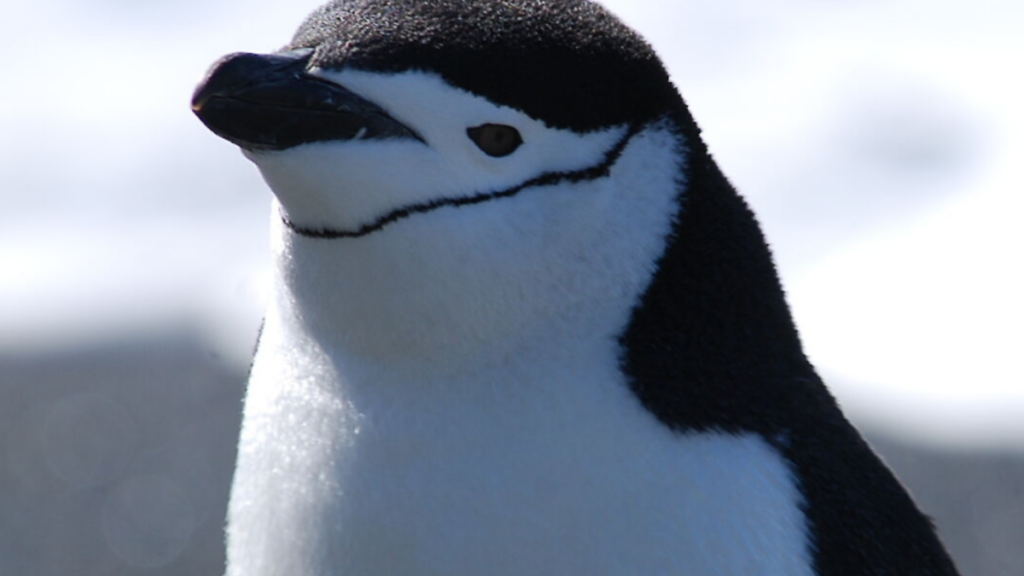
Chinstrap penguins are among the most recognizable and abundant penguin species in the Antarctic and sub-Antarctic regions. Their distinctive black line under the chin resembles a strap, giving them their name, while their social, noisy colonies make them a fascinating subject for researchers and wildlife enthusiasts alike. This article explores their life cycle, habitat, diet, adaptations, and conservation status in detail.
What is the Chinstrap Penguin?
Scientific Name & Classification
The Chinstrap penguin’s scientific name is Pygoscelis antarcticus, and it belongs to the penguin family Spheniscidae. Its distinctive black band under the chin distinguishes it from other species such as the Adélie and Gentoo penguins.


Physical Appearance
- Height: 71–76 cm (28–30 inches)
- Weight: 3.5–5.5 kg (7.7–12 lbs), with males slightly larger than females
- Coloration: Black back and head, white face and belly, black chinstrap line
- Adaptations: Dense waterproof feathers and a thick layer of blubber to survive icy waters.
These physical traits allow Chinstrap penguins to endure harsh Antarctic environments and hunt efficiently in cold waters.
Habitat & Distribution
Where They Live
Chinstrap penguins are primarily found on coastal regions and islands of the Antarctic and sub-Antarctic:
- South Orkney Islands
- South Shetland Islands
- South Sandwich Islands
- Smaller colonies exist on the Balleny Islands and other remote sub-Antarctic islands
During the non-breeding season, they may move northward to follow prey availability, especially Antarctic krill.
Typical Habitat
Chinstraps prefer rocky, ice-free slopes or shores for nesting. Colonies can be massive, with hundreds of thousands of birds gathering closely together. These social colonies help protect against predators and harsh environmental conditions. According to National Geographic
Diet & Foraging
What They Eat
Chinstrap penguins primarily feed on Antarctic krill, which makes up 95–99% of their diet during breeding season. They also eat:
- Small fish
- Squid
- Other crustaceans
Foraging Behavior
- Diving depth: 45–70 m, with most foraging dives being shallower
- Hunting style: fast, agile swimming with streamlined bodies to catch prey
- Adaptations: waterproof feathers and blubber provide insulation in freezing waters
Life Cycle: Breeding, Nesting & Chicks
Breeding Season
- Typically lays two eggs per season, from late November to early December
- Nests are circular and made of small stones
- Both parents share incubation duties for 33–37 days
Chicks & Crèches
- After hatching, chicks are cared for by parents
- As they grow, chicks join crèches, groups that provide warmth and protection while parents forage
- Fledging occurs around 7–8 weeks, after which young penguins begin foraging independently
Lifespan
- Sexual maturity: ~3 years
- Average lifespan: 15–20 years in the wild
Population, Conservation & Threats
Global Population
- Estimated 3.42 million breeding pairs across 375 colonies
- 45% of colonies have declined since the 1980s, while 18% have increased
- Some colonies are now absent, and new colonies have been identified
Conservation Status
- IUCN Red List: Least Concern
- Populations in some regions have declined sharply due to environmental changes and krill depletion
Threats
- Climate Change: Reducing sea ice and affecting krill availability
- Overfishing: Competition for krill
- Human Disturbance & Habitat Loss
- Natural Hazards: Volcanic activity on breeding islands
Adaptations & Interesting Facts
- Countershading: Black-and-white coloring helps camouflage in water
- Colonial Living: Large, noisy colonies provide protection and social interaction
- Loyalty: Often return to the same nest site and partner each season
Conclusion
The Chinstrap penguin is an iconic Antarctic species — highly social, resilient, and uniquely adapted to extreme environments. Despite being classified as Least Concern, their populations are declining in certain areas due to climate change, krill depletion, and environmental pressures. Ongoing monitoring and conservation efforts are crucial to ensure these striking black-and-white birds continue to thrive across the Antarctic region.
FAQs About Chinstrap Penguins
| Question | Answer |
|---|---|
| How tall are Chinstrap penguins? | 71–76 cm (28–30 inches) |
| How much do they weigh? | 3.5–5.5 kg (7.7–12 lbs) |
| What do they eat? | Mainly Antarctic krill, plus small fish, squid |
| Where do they live? | South Orkney, South Shetland, South Sandwich Islands, Balleny Islands |
| How many eggs do they lay? | Usually two per season |
| Are they endangered? | No, Least Concern but declining in some regions |
| How long do they live? | About 15–20 years in the wild |
| Why does climate change affect them? | Reduced sea ice and krill decline disrupt feeding and breeding |