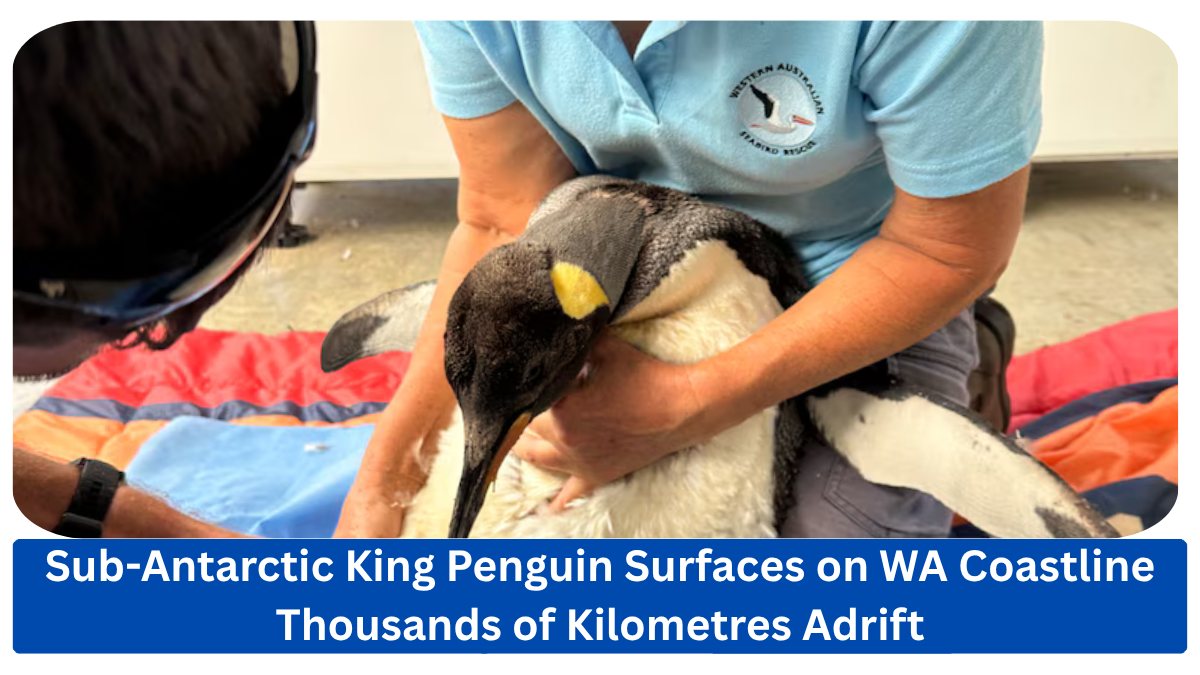
A king penguin native to the sub-Antarctic has turned up on an isolated beach along Western Australia’s southern coastline, a location roughly 4,000 kilometres removed from its natural environment, marking what wildlife authorities believe to be an unprecedented occurrence in the state in over a decade.
The bird was first noticed by holidaymakers camping at Quagi Beach, a seaside location situated close to 700 kilometres outside Perth. Their report prompted the Esperance Wildlife Hospital to dispatch a response team. Veteran wildlife carer Lori-Ann Shibish, who led the effort, admitted she had anticipated something far less remarkable.
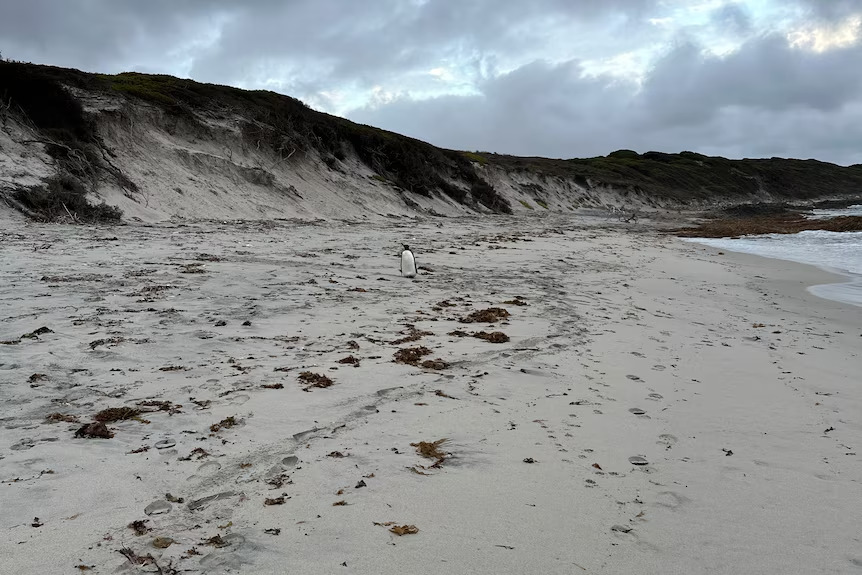
“I just assumed it was going to be a little penguin,” she recalled. What greeted her upon arrival was anything but ordinary.
Ms Shibish, who had previously joined a scientific expedition to Antarctica, had no difficulty identifying the animal on sight. King penguins rank as the planet’s second-largest penguin species and typically inhabit the ice-free zones of the sub-Antarctic, a region that includes Australian offshore territories such as Heard Island, McDonald Island, and Macquarie Island.
Bird Flu Fears Spark Full Protective Measures
The timing of the discovery carried additional weight. Earlier in 2025, a virulent strain of avian influenza had been detected on Heard Island, leading wildlife agencies to place all migratory and vagrant species arriving from that part of the world under heightened scrutiny.
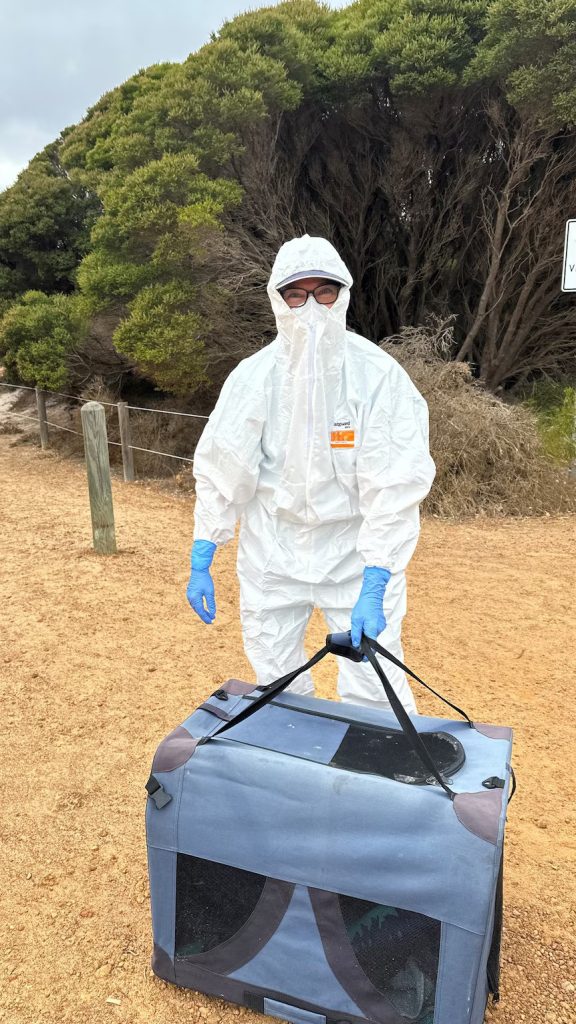
Responding with caution, Ms Shibish equipped herself with an avian influenza grab kit provided by Murdoch University before making any contact with the animal.
“If you can picture full hazmat gear, I was completely dressed in white with goggles, a breathing mask, and gloves, in order to ensure that we and the penguin were safe,” she described.
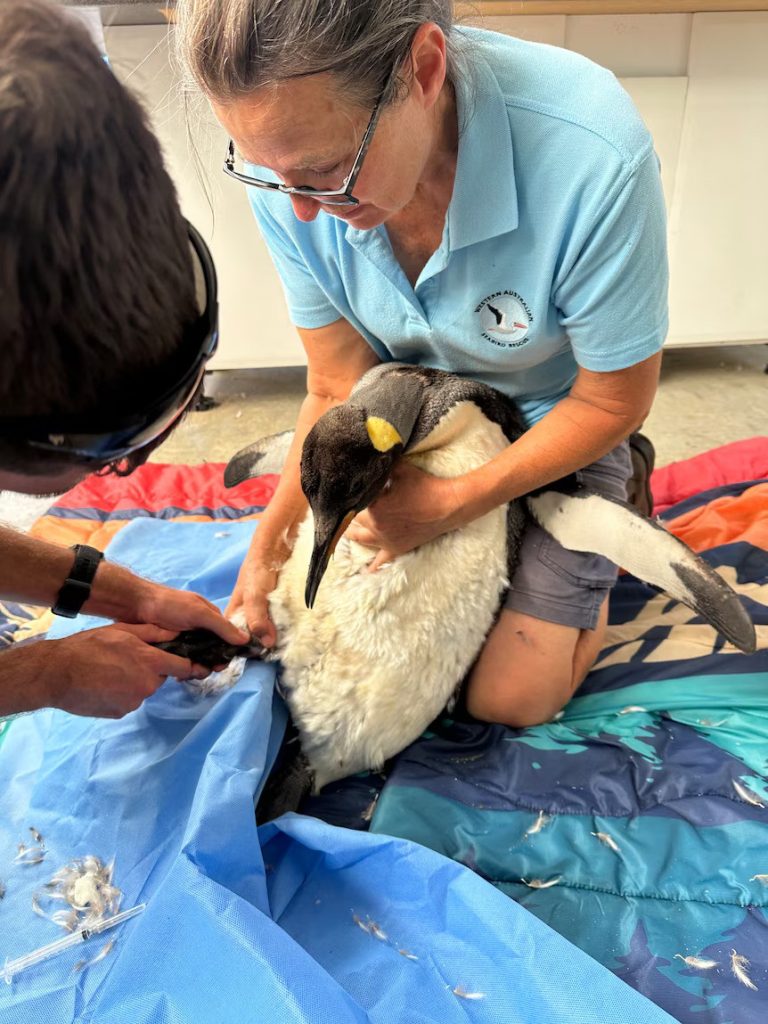
Once transported to the Esperance Wildlife Hospital, the penguin was examined jointly by Swans Veterinarian Services and the Department of Primary Industries and Regional Development, with swabs collected and submitted for laboratory analysis.
The outcome brought considerable relief. “The good news is the results returned negative for both H1N1 and something called Newcastle disease,” Ms Shibish said.
Wandering This Far Is Exceptionally Unusual
For a king penguin to stray this far from its territory is considered highly irregular. A search of past records led Ms Shibish to conclude that no verified sighting of the species had been recorded anywhere in Western Australia since 2011.
A loosely parallel situation unfolded the previous year, when an emperor penguin, a different but related species, completed a similarly improbable voyage from Antarctic waters to WA’s south coast, washing ashore nearly 500 kilometres from the current site. Ms Shibish noted that Carol Biddulp, who nursed that bird back to health, had offered her valuable guidance throughout the current case.
The initial discovery was made by Mihkel Vaha, a traveller making his way around the country by campervan alongside his partner Jamie. The couple had pitched up at the quiet beachside location when Vaha set off along the shoreline with the dogs during a wet afternoon.
“It was a pretty rainy day, and so I took the dogs for a bit of a walk and I was sitting at the top of the beach,” he said. His partner was unconvinced when he returned with the news.
“She goes, ‘You’re not looking, don’t be silly, there’s no penguin there.'”
The couple kept well back from the bird while two other campers at the site placed the call to the wildlife hospital. “It’s pretty cool to see out in the wild,” Vaha added.
A Long Road to Recovery
The penguin has since been given the name Hope, drawn from the French meaning of Esperance, which points toward optimistic anticipation rather than mere wishing, and is currently confined to a quarantine enclosure as her recovery gets underway.
Ms Shibish identified the bird’s condition as “catastrophic moult,” a natural but demanding biological process that she believes likely drove the animal onto dry land in the first place.
“Prior to a catastrophic moult, a penguin will eat as much as it can to put on that extra weight to then take it through the month-long period where it just has to stand on dry land and wait for the process to complete,” she explained. Hope was already well below healthy condition upon arrival. “When she came in, she wasn’t at her optimum weight, she was already down by about six kilograms.”
The bird is now working through as much as a kilogram of fish daily as staff help rebuild her strength. She will need to complete both her weight recovery and the moulting cycle before any release back into open water can be considered.
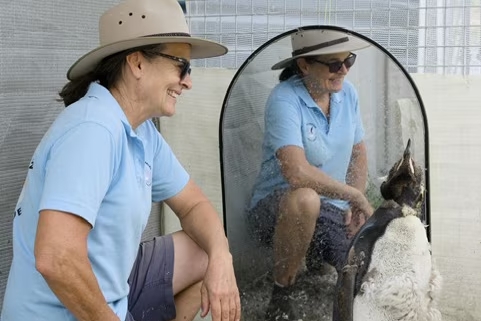
To prevent distress during her time in isolation, carers have positioned a mirror inside her pen, a technique grounded in the social instincts of flock-dwelling animals.
“With animals that are herd or flock animals, being able to see a reflection of their own kind puts them at ease because they think that they’re not alone,” Ms Shibish said. “They think they’re in the company of their own species.”














Danianne Jansen – Content Writer & Animal Care Contributor
Danianne Jansen is a professional writer and educator with a strong background in storytelling and research-based content creation. With experience as an English and drama teacher, she brings clarity, structure, and depth to every article she writes.
At WildlifeFree, she contributes to pet care and animal-related content, focusing on simplifying complex information into easy, practical guides for everyday pet owners. Her writing approach combines research, readability, and real-world usefulness to help readers better understand animal care, behavior, and nutrition.
While her primary background is in writing and education, she is passionate about animals and dedicated to producing accurate, helpful, and engaging content that supports responsible pet ownership.
Her goal is to make reliable pet care knowledge accessible to everyone — whether they are beginners or experienced pet owners.


