Baby penguins — also known as “chicks” — are among the cutest and most fascinating animals on Earth. But behind their adorable look is a world full of survival challenges, unique parenting, extreme climate adaptation, and surprising intelligence.
In this guide, you will learn everything about baby penguins, from their birth to adulthood, including their diet, habitat, behavior, dangers, conservation status, and emotional facts.
Table of Contents
Baby Penguin Pictures Gallery
Baby penguins are called chicks, and their appearance changes quickly as they grow. Some species hatch with soft down feathers, while others stay fluffy for months before developing waterproof adult plumage. The image gallery below shows the most useful stages and species so readers can understand how baby penguins look, grow, and survive.

Emperor penguins breed in winter. The female lays one egg, then leaves, and the male balances the egg on his feet under a warm brood pouch for about 65 days through severe Antarctic weather. When the female returns, she brings food that is regurgitated for the newly hatched chick.

Newly hatched chicks are highly dependent on adults for warmth, protection, and food. In penguins, early survival depends on shared parental care and close guarding during the first part of life.

Penguins come ashore to lay eggs and raise their chicks. Most penguin species lay one or two eggs at a time, and parents take turns keeping those eggs warm and safe before the chick hatches.

King penguin chicks are especially striking because their fluffy dark brown plumage looks so different from the adults that they were once thought to be a separate species. In the wild, king penguins usually begin to fledge around 13 months after hatching.

Adélie penguins usually lay two eggs, and parents share incubation duties. After about three weeks, parents can leave the chicks alone while the youngsters gather in crèches, and by about nine weeks the chicks’ downy feathers are replaced by waterproof adult feathers.

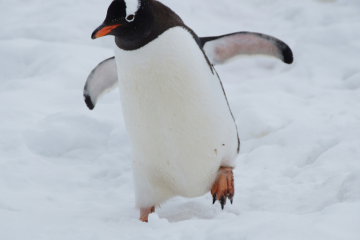
Gentoo chicks grow quickly but still need repeated feeding support from their parents. Penguins International reports that most Gentoos first go to sea at about 70 days old, and they continue to receive food during the transition period while making several practice trips.
Baby Penguin Growth Stages
Baby penguins do not become independent right away. They first hatch as vulnerable chicks, then grow into fluffy juveniles, and finally replace their down with waterproof feathers before they are ready for life in the ocean. Different species move through these stages at different speeds, with emperor, Adélie, king, and gentoo penguins all showing their own growth patterns.
| Stage | What Happens |
|---|---|
| Hatchling | Depends completely on parents |
| Chick | Grows fast and stays warm in the colony |
| Juvenile | Starts moving toward independence |
| Adult | Develops waterproof feathers and hunts at sea |
Baby Penguin Facts
- Penguins come ashore to lay their eggs and raise their chicks.
- Most penguins lay only one or two eggs at a time.
- Penguin parents often take turns keeping the eggs warm and protected.
- Emperor penguin females usually lay one egg.
- Emperor penguin males incubate the egg on their feet under a brood pouch for about 65 days.
- When female emperor penguins return, they bring food that is regurgitated for the chicks.
- Emperor chicks begin to crèche in September.
- Emperor chicks are usually provisioned by both parents until they fledge in December.
- Adélie penguins usually lay two eggs.
- Adélie parents take turns sitting on the eggs.
- Adélie chicks gather in crèches after about three weeks.
- Adélie chicks have waterproof adult feathers by about nine weeks.
- King penguin chicks have fluffy dark brown plumage.
- King penguin chicks looked so different from adults that they were once thought to be a separate species.
- In the wild, king penguins usually begin to fledge around 13 months after hatching.
- Gentoo chicks first go to sea at about 70 days old.
- Gentoo chicks make several practice trips and continue to be fed during the transition.
- Gentoo eggs and chicks are vulnerable to birds of prey such as skuas and caracaras.
- Chinstrap penguin chicks gather in crèches and can head to sea at around two months old.
- Climate change can threaten chicks by increasing rain and wet conditions that can cause hypothermia.
What is a Baby Penguin Called?
A baby penguin is called a “chick.”
- A group of chicks staying together is called a crèche (like a kindergarten).
- A baby Emperor penguin chick is covered with silver-grey fluffy down.
- Their parents recognize them only by voice, not by looks.
Birth & Early Life of a Baby Penguin
The Egg Stage
Depending on the species, female penguins lay 1–2 eggs.
The most unique part:
- In Emperor Penguins, the father holds the egg on his feet for 65–75 days in freezing −40°C temperatures.
- The mother travels up to 80 km to bring food.
Hatching
Baby penguins break the eggshell using a small sharp spot called a “egg tooth.”
Hatching can take 2–3 days, because penguin chicks are extremely fragile.
First Days After Birth
A newborn penguin:
- Cannot walk properly
- Cannot maintain body heat
- Cannot find food
- Depends completely on its parents
Parents feed newborn chicks a special mixture called “penguin milk” — a semi-digested food regurgitated by the mother or father.
What Do Baby Penguins Look Like?
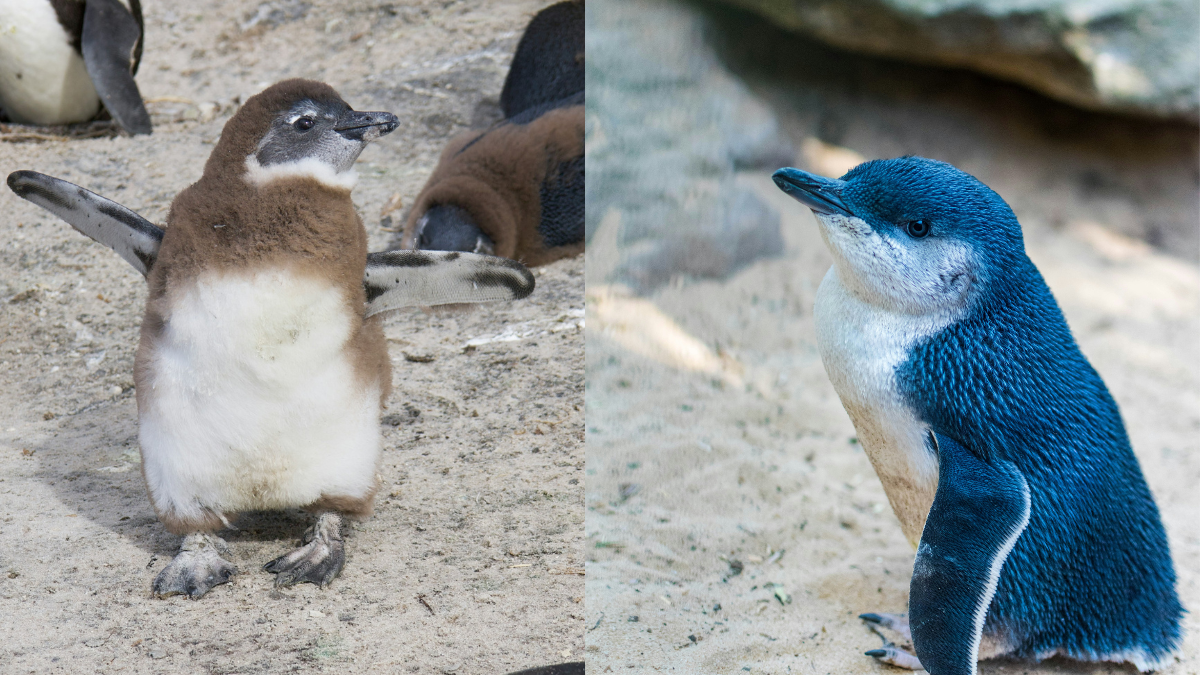
Baby penguins don’t look like adult penguins. They have:
- Soft fluffy down feathers
- Round face with a small beak
- Big black eyes
- Short flippers
- Grey, brown, or white color depending on species
They cannot swim until they grow waterproof feathers.
How Baby Penguins Survive Extreme Cold
Baby penguins survive Antarctica through:
Parental Warmth: Parents keep chicks in a body-warm pocket called a brood pouch.
Huddling Behavior: Groups of chicks stand tightly packed to conserve warmth.
Down Feathers: The fluffy coat traps air for insulation — but is not waterproof, so they avoid water until older.
What Do Baby Penguins Eat?
Baby penguins eat:
- Regurgitated fish
- Regurgitated krill
- Squid
- Sometimes a high-fat “milk” produced by parents
Adult penguins can store food in their throats for up to 24 hours to feed their young.
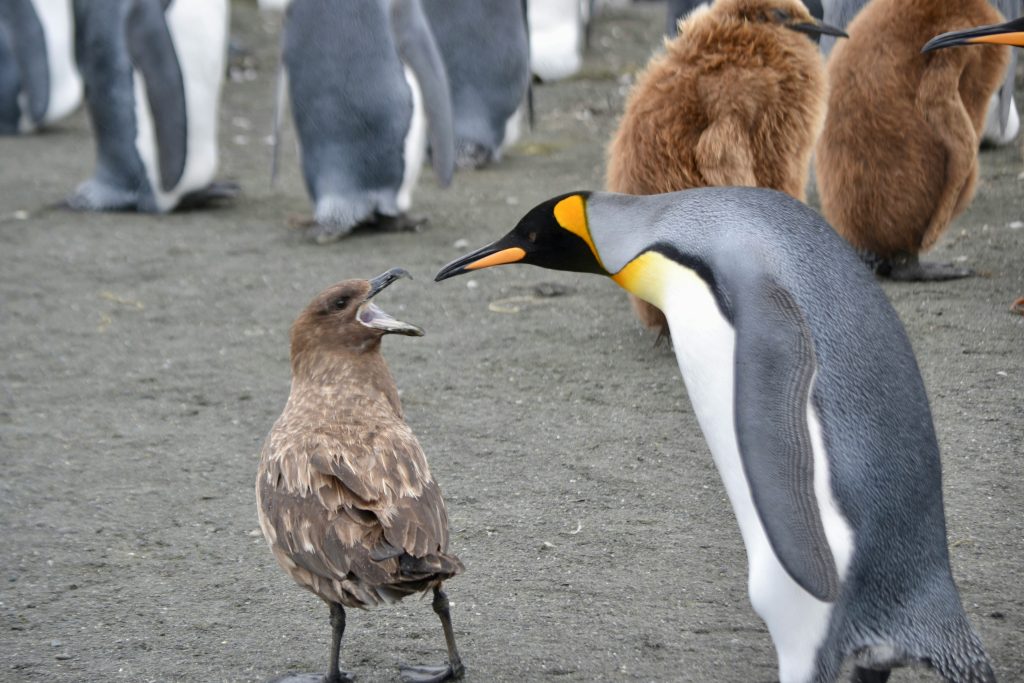
Image: Unsplash.com
How Parent Penguins Feed Their Chicks
Baby penguins cannot hunt on their own, so adults bring food back from the sea. In many species, the parent regurgitates partially digested fish, krill, or squid directly into the chick’s mouth. This feeding method lets the chick get concentrated nutrition while the adults continue making long foraging trips.
How Baby Penguins Stay Warm
Baby penguins stay warm through a mix of dense down feathers, parental guarding, and group behavior. Emperor chicks are especially dependent on colony support: they begin crèching while both parents forage, and they must develop waterproof feathers before sea ice conditions change.
When Do Baby Penguins Learn to Walk & Swim?
Walking: Around 2–3 weeks, chicks begin small steps.
Swimming: Between 2–4 months, once waterproof feathers grow.
Swimming is the most dangerous stage, because chicks face predators like:
- Leopard seals
- Sea lions
- Orcas (killer whales)
Types of Baby Penguins
| Penguin Species | Baby Color | Egg Count | Special Feature |
|---|---|---|---|
| Emperor Penguin | Silver-grey | 1 | Father incubates egg |
| King Penguin | Brown | 1 | Longest chick stage (up to 1 year) |
| Adelie Penguin | Grey/White | 2 | Fastest-growing chicks |
| Gentoo Penguin | Brown/Grey | 2 | Learn to swim very early |
| African Penguin | Grey/Black | 2 | Lives in warm climate |
Threats Faced by Baby Penguins
Baby penguins are highly vulnerable. Major threats include:
Natural Predators
- Skua birds
- Giant petrels
- Leopard seals
- Orcas
Climate Change
Melting ice reduces breeding areas.
Lack of Food
Overfishing decreases krill — their main diet.
Human Activities
- Oil spills
- Coastal development
- Marine pollution
Conservation Status
Several penguin species are now threatened:
- Emperor Penguin — Near Threatened
- African Penguin — Endangered
Penguin conservation efforts include:
- Protecting nesting beaches
- Reducing overfishing
- Marine protected areas
- Rescue & rehabilitation centers
Types of Baby Penguins
Baby Emperor Penguin
Emperor chicks are raised in one of the harshest environments on Earth. The male incubates the egg through the Antarctic winter, and the chick later joins a crèche until it is ready for independence.
Baby King Penguin
King penguin chicks are famous for their dark brown, fluffy plumage, which makes them look nothing like adults. Their chick stage lasts much longer than many other species.
Baby Adélie Penguin
Adélie chicks grow quickly in Antarctic breeding colonies. By about nine weeks, their waterproof feathers are in place and they can move into the ocean life stage.
Baby Gentoo Penguin
Gentoo chicks are known for steady parental feeding and a more gradual transition to the sea. Most first go to sea at about 70 days and continue to receive food during practice trips.
What Eats Baby Penguins?
Baby penguins are vulnerable to birds of prey such as skuas, and some species also face threats from larger marine predators near the water. On land, chicks can also suffer from weather exposure, food shortages, and environmental stress.
Threats Facing Baby Penguins
Climate change can make breeding conditions harder by increasing rain and unstable ice conditions, which are dangerous for chicks that still rely on down feathers. Conservation programs are especially important for threatened penguin species, including African penguins, where rearing and release programs have already helped thousands of chicks return to the wild.
FAQs About Baby Penguins
1. Do baby penguins drink milk?
A: Not real milk — they drink a food mixture regurgitated by their parents.
2. Can baby penguins swim?
A: Not until they get waterproof feathers (2–4 months).
3. What is a baby Emperor penguin called?
A: A chick — with a silver-grey fluffy body.
4. How long do baby penguins stay with parents?
A: Up to 5 months, depending on species.