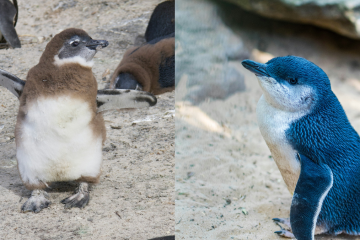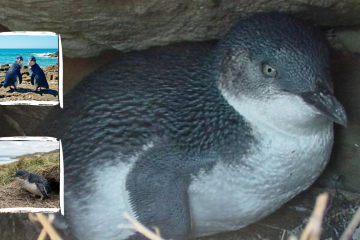
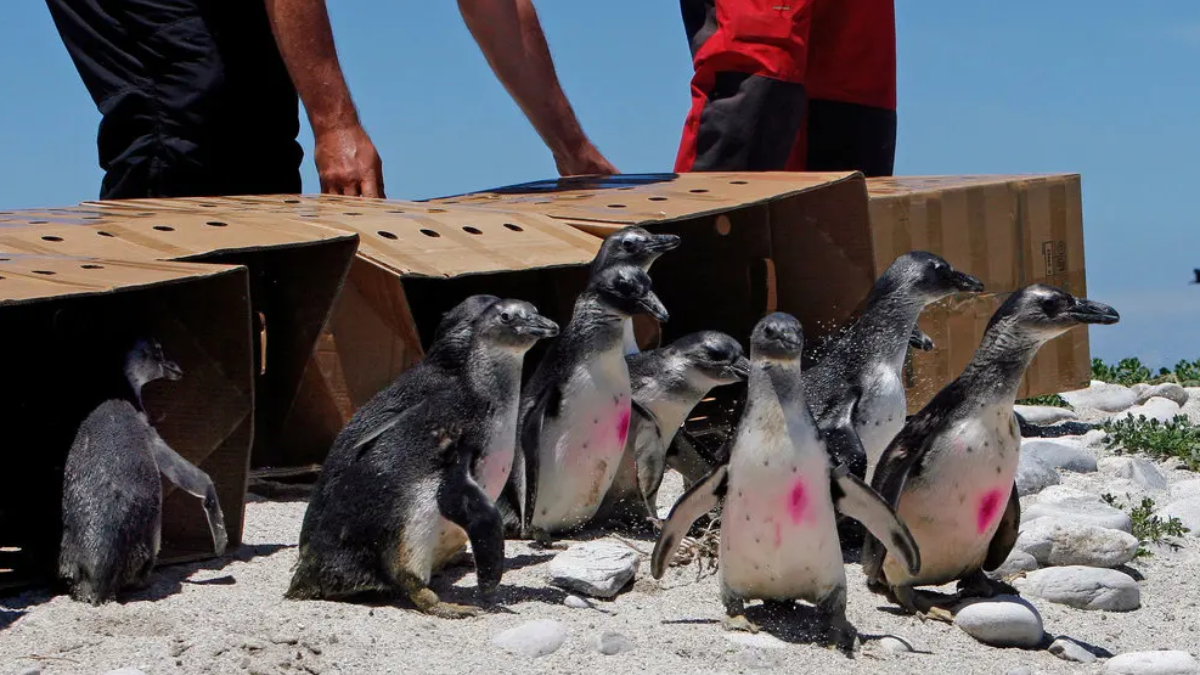
Penguins are among nature’s most remarkable creatures — adapted to survive in some of the most extreme environments on Earth. Yet, despite their resilience, many penguin species face growing threats from human activity. Penguins protect themselves using a combination of camouflage, group behavior, and powerful survival strategies to escape predators like leopard seals and orcas.
In this article, we’ll explore both how penguins defend themselves naturally and concrete steps you can take to support their conservation. Before we explore how penguins protect themselves, you can check our detailed species guide: 14 Types of Penguins, where we explain the characteristics of all penguin types.
Table of Contents

What Predators Do Penguins Face?
Penguins face several dangerous predators both in the water and on land. In the ocean, their main threats include leopard seals, orcas, and large sharks. On land, eggs and chicks are vulnerable to birds like skuas and giant petrels. In some regions, introduced predators such as foxes, rats, and feral cats also pose serious risks.
Physical & Biological Defenses
Insulation: Blubber, Feathers, and Heat Exchange
- Penguins have a thick layer of blubber beneath their skin, which acts as insulation and energy reserve.
- Their feathers are densely packed (about 70 per square inch in some species), trapping air for added insulation.
- They secrete oil from a gland near their tail (uropygial gland) that they spread on their feathers by preening — this maintains waterproofing and keeps them warm.
- Some penguin species (e.g., Emperor penguins) use a countercurrent heat exchange system in extremities (feet, bill) to minimize heat loss.
Bone Structure & Diving Adaptations
- Penguins’ bones are denser than most birds, which reduces buoyancy and helps them dive deeply and efficiently.
- Their wing-like flippers are rigid and optimized for “underwater flight,” allowing powerful propulsion in the water.
- Penguins have salt glands located above their eyes that excrete excess salt from their bodies, allowing them to drink seawater.
Camouflage: Countershading
- Penguins display countershading their backs are dark and bellies are white. This helps them blend in with the ocean when viewed from both above and below, thereby reducing predation risk. This adaptation helps penguins avoid predators such as leopard seals and orcas by blending into the ocean environment.
Behavioral Strategies for Survival
How Do Penguins Stay Warm
Penguins survive extreme cold through a combination of behavioral and physical adaptations. Their dense feathers, thick blubber layer, waterproof coating, and group huddling behavior all work together to conserve heat in freezing temperatures.
Huddling to Stay Warm and Safe
- Many penguin species, especially Emperor penguins, huddle together in large groups. Huddling reduces individual heat loss and helps them survive freezing temperatures.
- Penguins continuously rotate within the huddle so that individuals on the outside (exposed to cold) can move inward, and those inside can move out.
- Recent modeling studies suggest that this reorganization also helps with efficient heat redistribution, according to ArXiv.
Tobogganing and Efficient Land Movement
- On ice or snow, penguins often slide on their bellies, using their feet to push themselves forward — a behavior called tobogganing. This allows energy-efficient travel over long distances.
- Their legs are positioned far back on the body, which helps steer while swimming and balances them while walking on land.
How Do Penguins Protect Themselves in Water vs on Land?
Protection in Water
- Penguins use a swimming technique called porpoising, where they repeatedly leap out of the water. This helps them travel quickly and evade marine predators.
- They also use sharp, agile turns underwater to outmaneuver predators, thanks to their streamlined body and powerful flippers.
- Vigilance is another key behavior: penguins communicate, scan their surroundings, and sometimes engage in “mobbing” behavior when a predator is nearby.
Protection on Land
Penguins rely on large colonies to reduce individual risk. Living in groups helps protect against predators and environmental threats.
How Do Penguins Protect Their Eggs and Chicks?
Penguins use extraordinary parenting strategies to protect their young. Male Emperor penguins balance a single egg on their feet and cover it with a brood pouch, keeping it warm in extreme cold. They can go for weeks without eating while protecting the egg.
After hatching, chicks often form groups called crèches. These groups help protect them from predators and harsh weather, while allowing parents to hunt for food.
Major Threats Facing Penguins Today
Climate Change & Food Scarcity
- Melting ice and shifting ocean currents affect penguin breeding habitats and reduce the availability of krill, which is a critical food source.
- Changes in nutrient cycles due to warming waters force penguins to travel further to find food, increasing their energy expenditure and reducing breeding success.
Overfishing and Competition for Prey
- Industrial-scale fishing often targets the same species that penguins feed on, including krill, sardines, and anchovies.
- Overfishing near breeding colonies makes it especially difficult for penguins to feed their chicks.
- A recent policy development: no-fishing zones have been agreed around key African penguin breeding sites, which is a hopeful step in reducing competition. According to The Guardian
Pollution: Plastics, Oil, and Invasive Predators
- Plastic pollution is a serious issue — penguins can ingest plastic or become entangled.
- Oil spills can coat penguin feathers, damaging their waterproofing and insulating ability.
- Invasive species (such as rats, foxes, or feral cats) threaten penguin eggs and chicks on breeding islands.
- Diseases are increasing in risk due to weakened immune systems from environmental stressors.
Habitat Loss and Human Disturbance
- Tourism, coastal development, and ship traffic can disturb nesting colonies, damaging habitat.
- Some penguin species’ habitats are under severe pressure; for example, Humboldt penguins are declining due to habitat destruction and food competition. According to Reuters
How You Can Help Penguins
Support Conservation Groups & Donate
- You can donate to organizations working on penguin rescue, rehabilitation, and habitat protection (e.g., SANCCOB for African penguins).
- Advocate for and support the creation/expansion of marine protected areas. For example, no-fishing zones around penguin colonies help ensure sustainable food for them.
Reduce Your Plastic Use & Carbon Footprint
- Cut down on single-use plastics, participate in beach clean-ups, and recycle properly to reduce pollution that harms penguins.
- Lower your carbon footprint by using public transport, reducing energy consumption, and supporting clean energy initiatives. These actions indirectly help penguins by mitigating climate change.
Advocate for Policy Change & Protected Areas
- Use your voice: support political and community efforts that push for responsible fisheries management and no-fishing zones around critical penguin habitats.
- Raise awareness by educating friends, family, and your broader community about penguin conservation and the threats they face.
Symbolic Adoption & Community Engagement
- You can “adopt” a penguin through conservation organizations like SANCCOB. Adoption programs help fund rescue and rehabilitation efforts.
- Volunteer or intern with wildlife groups — many conservation organizations welcome help, and you can contribute even without extensive experience.
Penguins are more than just adorable birds — they are resilient, highly adapted survivors. But they need our help now more than ever. By understanding how they protect themselves and by taking meaningful actions, you can play a part in ensuring their future.
Frequently Asked Questions (FAQs)
| Question | Answer |
|---|---|
| What is the main predator of penguins? | Penguins are mainly hunted by leopard seals, orcas, sharks, and seabirds like skuas. |
| How do penguins protect their eggs? | Penguins protect eggs by keeping them warm on their feet under a brood pouch, especially in species like Emperor penguins. |
| Can I adopt a penguin? | Yes — organizations like SANCCOB offer penguin adoption programs where your support helps their conservation efforts. |
| What’s the biggest threat to penguins? | The biggest threats include climate change (impacting their food), overfishing, and habitat loss through human disturbance. |
| Do small actions make a difference? | Absolutely — reducing plastic use, advocating for protected zones, and supporting conservation groups all contribute to long-term penguin survival. |
| Why do penguins huddle? | Huddling helps them conserve heat, reduce energy loss, and survive harsh temperatures by sharing warmth. |














Danianne Jansen – Content Writer & Animal Care Contributor
Danianne Jansen is a professional writer and educator with a strong background in storytelling and research-based content creation. With experience as an English and drama teacher, she brings clarity, structure, and depth to every article she writes.
At WildlifeFree, she contributes to pet care and animal-related content, focusing on simplifying complex information into easy, practical guides for everyday pet owners. Her writing approach combines research, readability, and real-world usefulness to help readers better understand animal care, behavior, and nutrition.
While her primary background is in writing and education, she is passionate about animals and dedicated to producing accurate, helpful, and engaging content that supports responsible pet ownership.
Her goal is to make reliable pet care knowledge accessible to everyone — whether they are beginners or experienced pet owners.