
Top 10 Facts
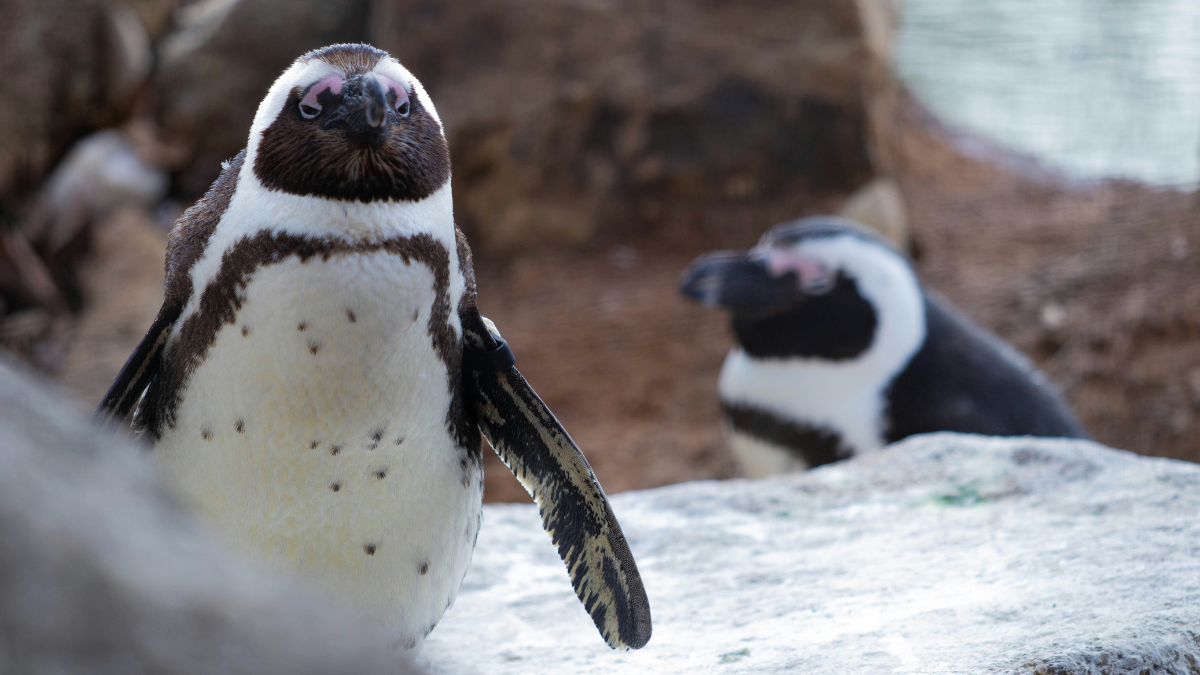
| 1. African penguins are the only penguins native to Africa. 2. They are also called black-footed or jackass penguins. 3. Adults stand about 60–70 cm tall. 4. They live along the coasts of Namibia and South Africa. 5. They can dive up to 130 meters deep. 6. Their main food includes anchovies and sardines. 7. They form monogamous pairs and often reuse the same nest. 8. They live 10–15 years in the wild, and longer in care. 9. Their pink eye patches help them regulate body temperature. 10. They are listed as Endangered due to rapid population decline. |
African Penguins
African penguins (Spheniscus demersus) are one of the most unique penguin species on the planet. Despite the popular belief that all penguins live in icy climates, these birds thrive along warm African coastlines. Below are ten in-depth facts exploring their identity, biology, behavior, and conservation status.
1. Names & Identity
African penguins are also known as black-footed penguins, Cape penguins, and traditionally jackass penguins because of their donkey-like braying call. Their scientific name, Spheniscus demersus, reflects their diving abilities.
They are the only penguin species native to the African continent, making them especially unique among global seabirds.
2. Appearance & Waterproof Feathers
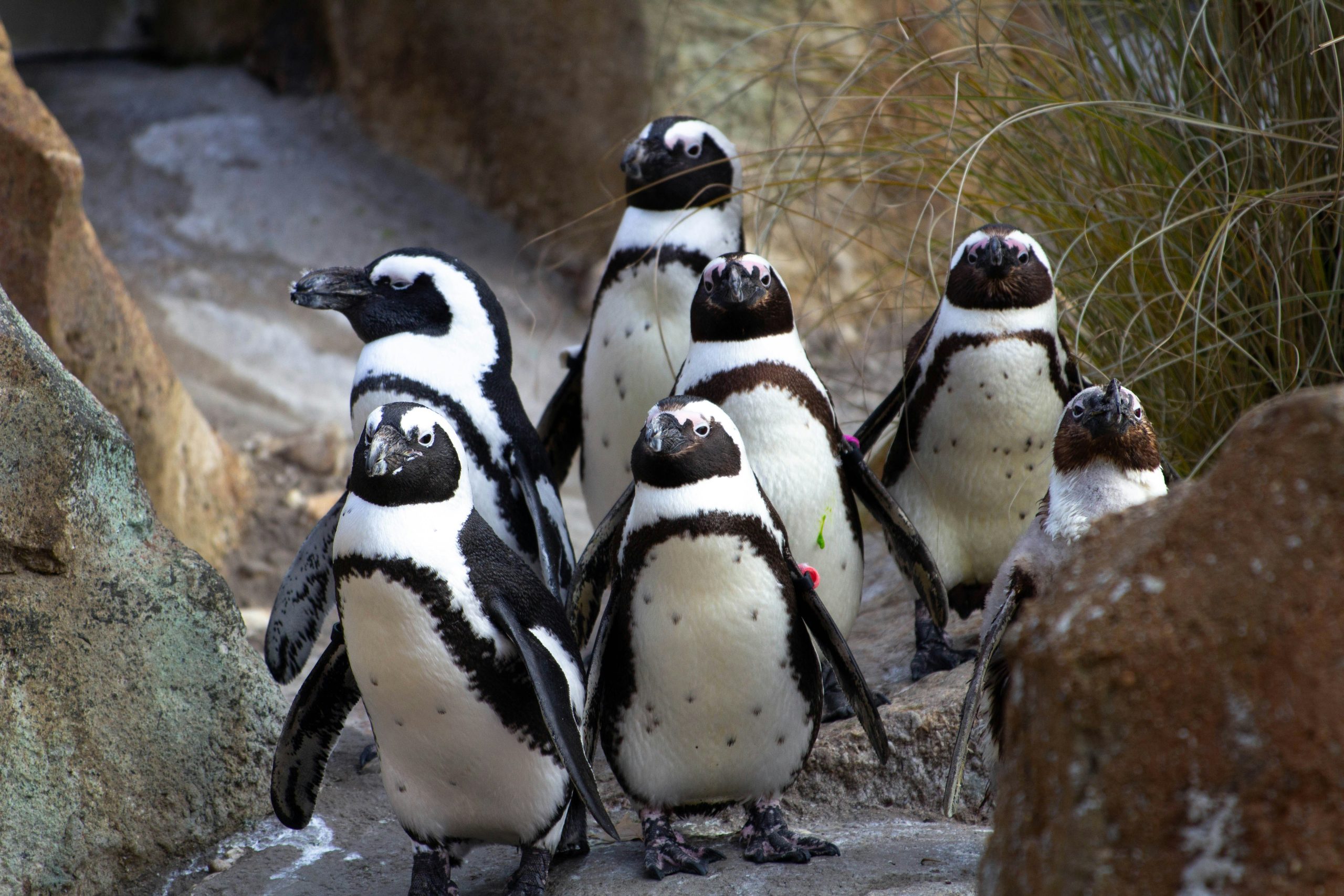
With black backs, white chests, and a pattern of unique black belly spots, every penguin has a distinct “fingerprint.” Their feathers are coated with a natural waterproofing substance that helps them stay warm and buoyant in cold ocean waters.
3. Size & Physical Build
African penguins stand 60–70 cm tall and typically weigh 2.2–3.5 kg. Males are slightly larger than females, while juveniles have greyish plumage until they mature.
4. Habitat & Distribution
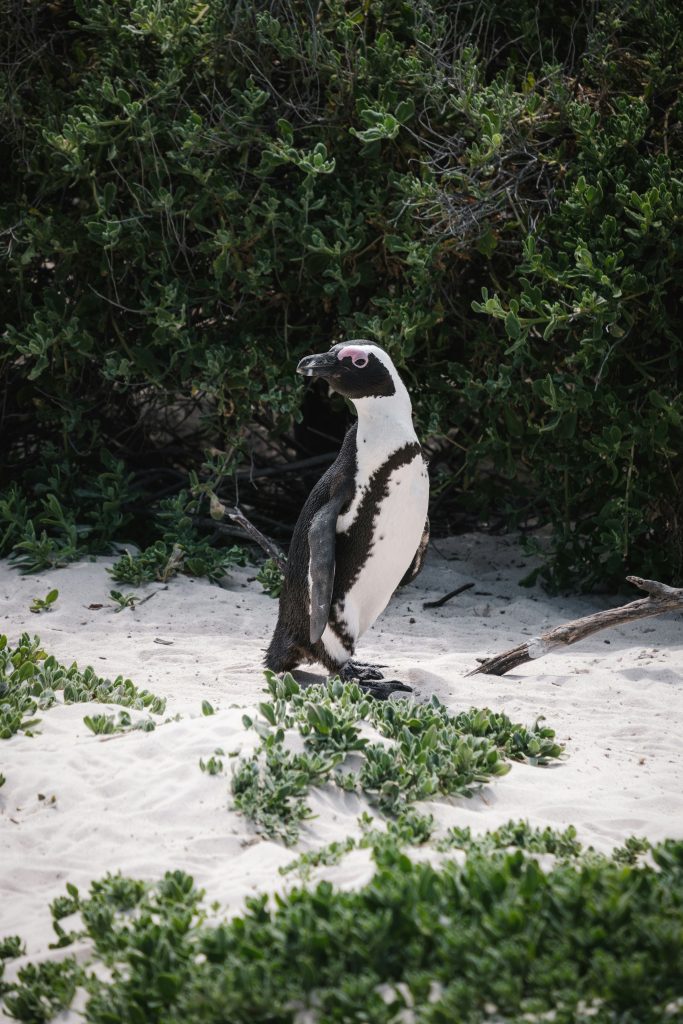
They live along the southwest coast of Africa, from Namibia to Algoa Bay in South Africa. These penguins inhabit rocky islands, sandy beaches, and coastal areas with good access to food.
Famous mainland colonies include:
- Boulders Beach
- Stony Point
5. Diving & Swimming Abilities
African penguins are strong swimmers.
- Usual dive depth: 30–60 m
- Maximum dive depth: Up to 130 m
- Swimming speed: Up to 20 km/h
They spend much of their time at sea searching for food, diving repeatedly throughout the day.
6. Diet & Feeding
Their main diet includes:
- Anchovies
- Sardines
- Squid
- Small crustaceans
Changes in fish availability, largely due to overfishing, force penguins to travel farther and expend more energy while hunting.
7. Breeding & Family Life
African penguins often mate for life.
- They return to the same nesting site each year.
- A typical clutch contains two eggs.
- Both parents incubate the eggs for 38–40 days.
After hatching, chicks form small groups called crèches for safety until they develop waterproof feathers.
8. Lifespan
In the wild, African penguins usually live 10–15 years, although many survive into their 20s. In zoos and conservation centers, stable food and medical care help them live even longer.
9. Special Adaptations
African penguins have a pink gland above their eyes. When their body temperature rises, more blood flows to this gland to release heat, acting as a built-in cooling system.
The spotted chest pattern also helps researchers identify individuals.
10. Threats & Conservation Status
African penguin populations have fallen sharply due to:
- Overfishing
- Oil spills
- Climate change
- Loss of nesting sites
- Human disturbance
They are currently classified as Endangered. Conservation programs now focus on protecting habitats, restricting overfishing, and rehabilitating injured birds.
Frequently Asked Questions
Q1. Why are African penguins called “jackass penguins”?
Because their loud braying call sounds similar to a donkey’s voice.
Q2. Do African penguins live in cold environments?
No. They live in warm, temperate regions along Africa’s southwest coast.
Q3. How fast can they swim?
They can reach speeds of up to 20 km/h when hunting underwater.
Q4. What is the biggest threat to African penguins today?
The main threat is food shortage caused by overfishing, along with oil spills and habitat loss.
Q5. Are African penguins aggressive?
They are generally calm but may defend themselves or their nests using their beaks and flippers.
References
- MarineBio Conservation Society – African Penguins species profile
- Encyclopedia Britannica – African Penguin overview
- San Diego Zoo Wildlife Alliance – African Penguin fact sheet


