The king penguin (Aptenodytes patagonicus) is the second‑largest penguin species on Earth, renowned for its striking colorful plumage, remarkable diving abilities, and unique breeding cycle. Unlike many penguins associated with Antarctica’s icy continent, king penguins thrive on sub‑Antarctic islands where they form vast, dense colonies.
Table of Contents
Physical Characteristics
Size and Appearance
- Adult king penguins typically stand 85–95 cm (33–37 in) tall and weigh between 11–18 kg (24–40 lb). According to National Geographic
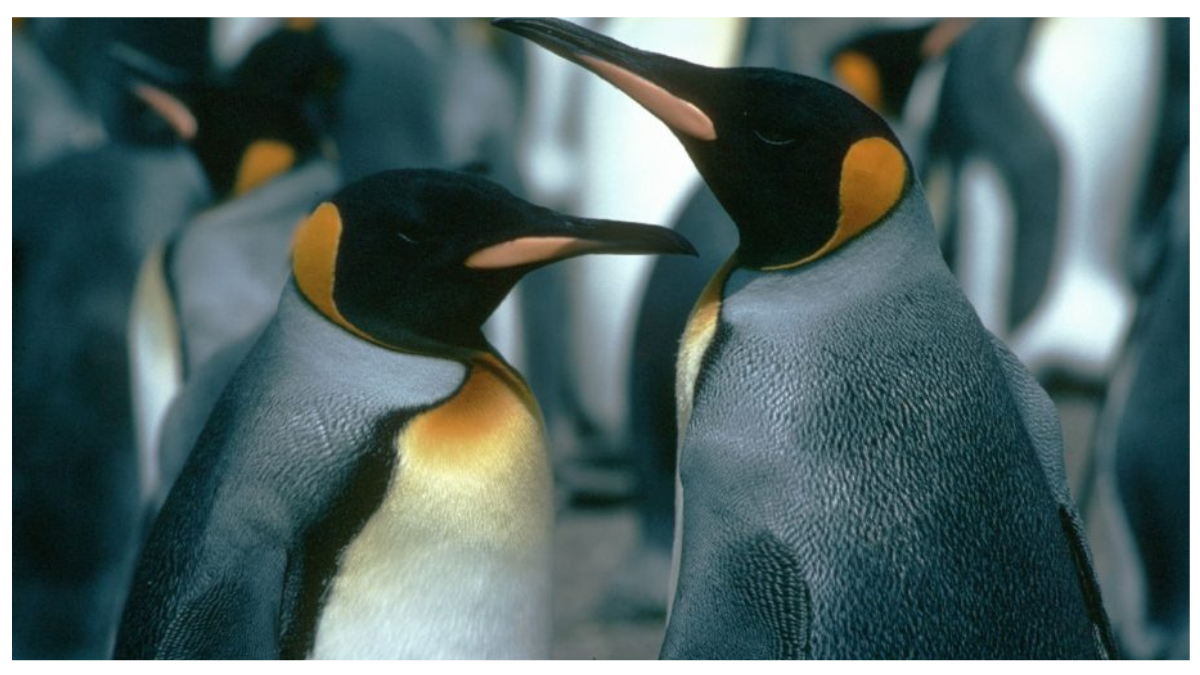
- They feature a sleek black back, white belly, and vibrant orange‑yellow patches on the head and upper chest.
- Their long, slender bill and streamlined body make them powerful swimmers.
Sex Differences and Juveniles
- Males and females look very similar, though males are usually slightly larger by size and weight. According to SeaWorld
- Chicks are covered in a dark brown downy plumage and look very different from adults until molting around 10–12 months of age.
Habitat and Distribution
Where King Penguins Live
King penguins breed and live on sub‑Antarctic islands rather than the Antarctic continent itself. These include:
- South Georgia Islands
- Crozet Islands
- Kerguelen Islands
- Prince Edward Islands
- Heard and McDonald Islands
- Macquarie Island
- Falkland Islands
- Tierra del Fuego region (Chile/Argentina)
They prefer ice‑free beaches and gentle slopes near the sea, which allows easy access for feeding and colony formation.
Geographic Range
| Region | Typical Presence |
|---|---|
| South Atlantic | South Georgia, Falklands |
| Southern Indian Ocean | Crozet, Kerguelen, Prince Edward |
| Southwest Pacific | Macquarie Island |
| Occasionally Vagrant | New Zealand, South Africa (rare) |
Diet and Feeding Behavior
What King Penguins Eat
King penguins are carnivorous hunters that feed mainly on:
- Small fish (especially lanternfish)
- Squid and cephalopods
They may capture up to 2,000 fish per day during peak foraging activity.
Hunting and Diving
- King penguins are skilled divers, often diving to depths over 300 m (980 ft) and staying underwater up to ~10 minutes.
- They use their powerful flippers to “fly” through water with speed and agility.
Behavior and Ecology
Social Structure
- King penguins live in large colonies that can number in the hundreds of thousands.
Swimming and Mobility
- On land, they walk deliberately or slide (“toboggan”) across snow and ice using their bellies and feet.
Breeding and Reproduction
Unique Breeding Cycle
King penguins have one of the longest breeding cycles of all birds — about 13 to 16 months.
Nesting Behavior
- They do not build nests. Eggs are incubated on the parents’ feet under a brood pouch of belly skin.
- Both parents take turns caring for the egg/chick and foraging at sea.
Chicks and Crèches
- After hatching, chicks are left in groups called crèches for social warmth and safety while parents fish.
Conservation Status
- King penguins are classified as Least Concern by the IUCN, with populations stable or increasing.
- Climate change and shifting ocean fronts remain long‑term threats affecting food availability.
Where to See King Penguins
If you want to see king penguins in the wild, some of the best places include:
- South Georgia Island (Atlantic) — massive colonies.
- Crozet and Kerguelen Islands — large breeding populations.
- Macquarie Island — a major sub‑Antarctic location.
- Protected reserves like King Penguin Nature Reserve (Chile) — controlled access to colonies.
10 Interesting Facts About King Penguins
- King penguins are the second-largest penguin species after emperor penguins.
- Their scientific name is Aptenodytes patagonicus.
- They are native to sub-Antarctic islands in the Southern Ocean.
- King penguins have orange and yellow patches on the neck and upper chest.
- They can dive to depths of 300 meters or more while hunting.
- Their breeding cycle lasts 14–16 months, one of the longest among penguins.
- King penguins do not build nests and incubate eggs on their feet.
- Both parents share incubation and chick-rearing duties.
- Parents recognize their chicks using unique vocal calls.
- King penguins can live up to 20–25 years in the wild under favorable conditions.
Frequently Asked Questions (FAQs)
Q: How tall is a king penguin?
A: Adults usually measure 85–95 cm (33–37 in) tall.
Q: Where do king penguins live?
A: On sub‑Antarctic islands near the Southern Ocean, not on the Antarctic continent itself.
Q: What do king penguins eat?
A: They eat small fish (lanternfish), squid, and other marine prey.
Q: How long do king penguins live?
A: Typically 15–26 years in the wild, with some individuals living up to ~27 years.
Q: Where can I see king penguins?
A: Wild king penguins are best seen on remote sub‑Antarctic islands like South Georgia, Crozet, Kerguelen, Macquarie, and in reserves such as King Penguin Nature Reserve (Chile).