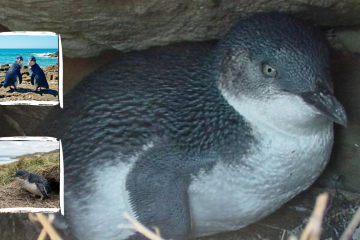
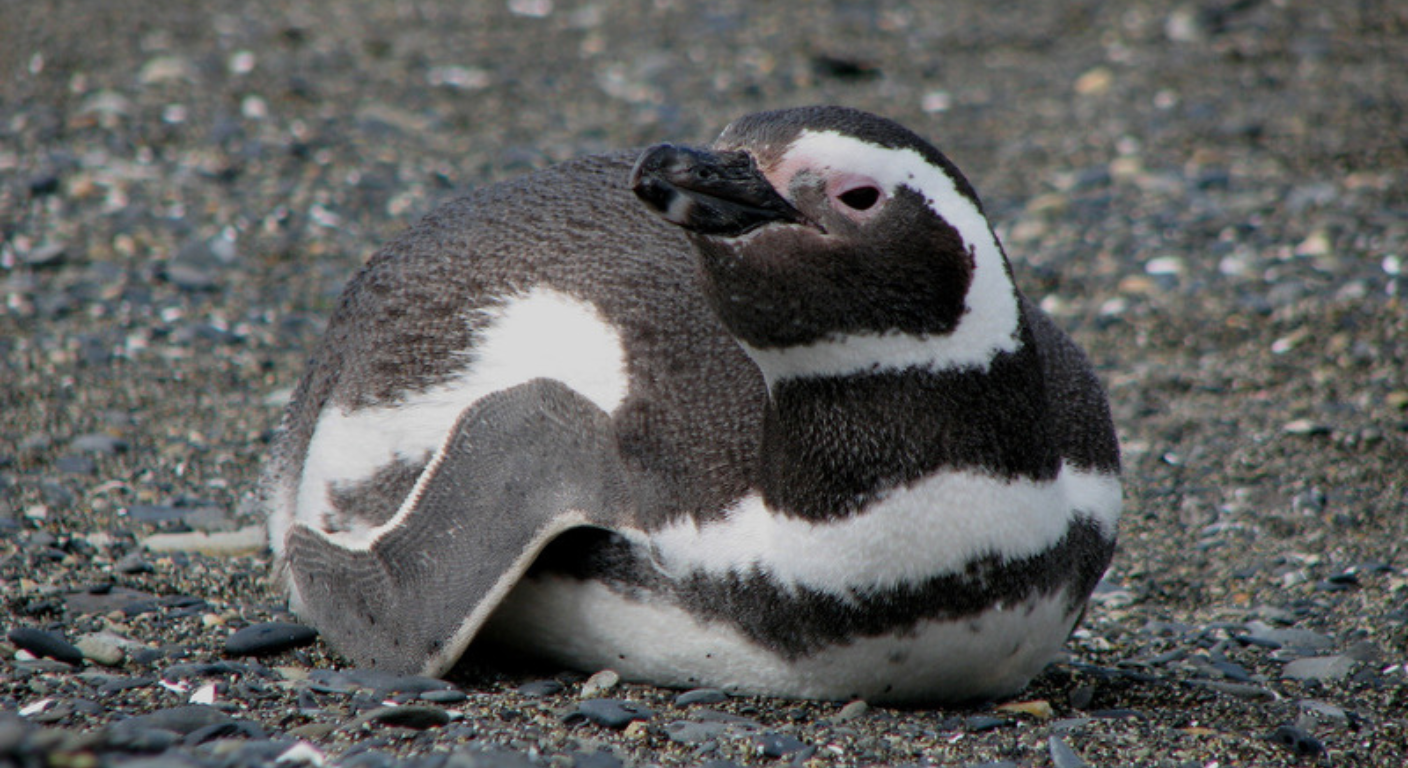
The Magellanic penguin (Spheniscus magellanicus) is a charismatic medium-sized seabird native to the temperate coasts of South America. Named for the Portuguese explorer Ferdinand Magellan, whose crew first documented the species in 1520, these penguins are among the most widespread of the banded penguin group, and show remarkable adaptations to life at sea and on land.
Table of Contents
Appearance and Physical Characteristics
Distinctive Markings and Body Structure
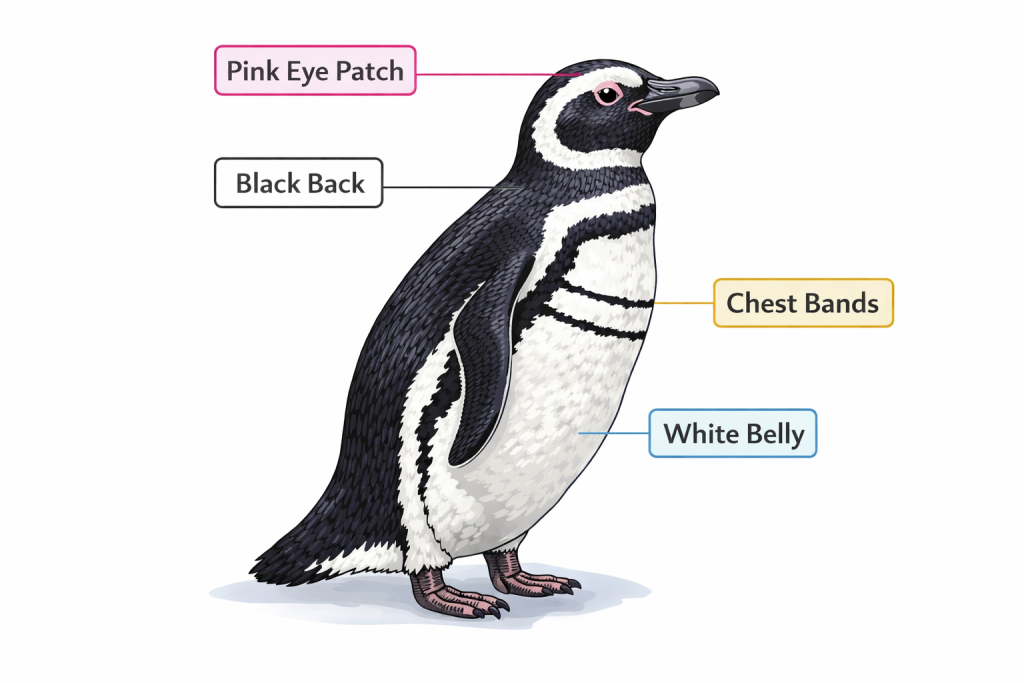
Magellanic penguins have a black back and white belly typical of penguins, along with two black bands across the chest, the lower one usually forming an inverted horseshoe shape. Their head is black with a broad white border from behind the eye to the throat.
Adults measure roughly 61–76 cm (24–30 in) in height and weigh around 4–5 kg (8–11 lbs), with males generally larger than females. According to National Geographic
Adaptations for the Marine Environment
These penguins have rigid, flipper-like wings that make them powerful swimmers, reaching underwater speeds over 24 km/h (15 mph) as they chase prey. Their coloration provides counter-shading camouflage — dark from above to blend with the ocean depths and light from below to match the bright surface.
Habitat, Range, and Migration
Native Range and Breeding Grounds
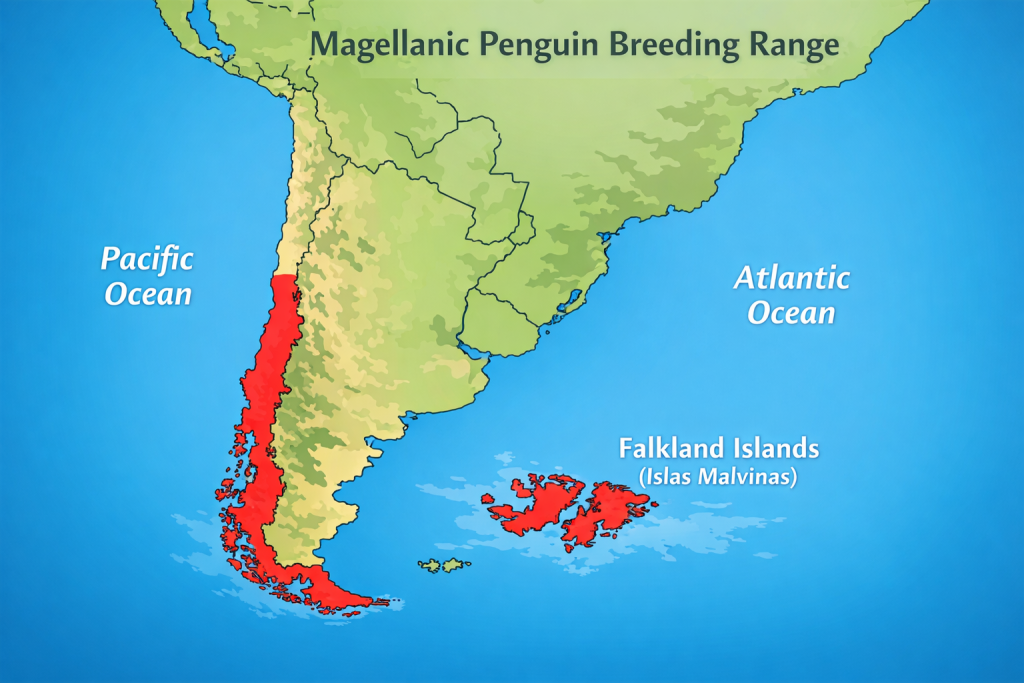
Magellanic penguins breed in large colonies along the southern coasts of Argentina and Chile, as well as on the Falkland Islands (Islas Malvinas). They nest in burrows, under bushes, or in scrapes in rocky ground near the sea.
Seasonal Migrations
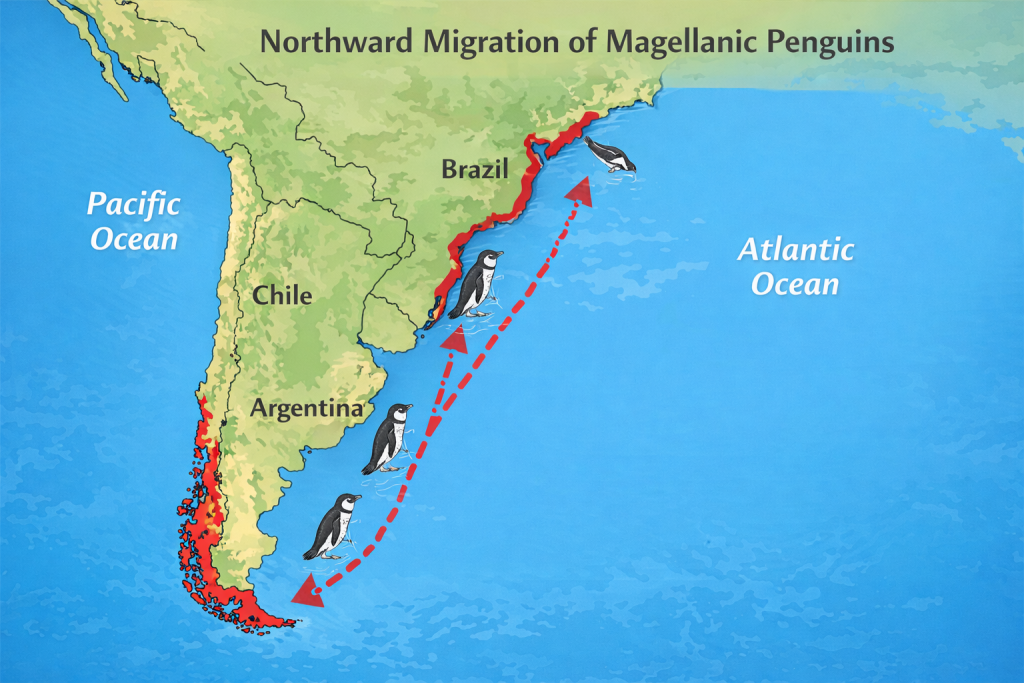
After the breeding season, these penguins migrate northward along the Atlantic coast. Many individuals travel as far as Brazil and Uruguay during the winter months, where they feed in offshore waters.
Feeding and Diet
Primary Food Sources
Magellanic penguins are carnivorous piscivores, feeding mainly on small schooling fish such as anchovies, sardines, and sprats, with squid and other cephalopods also being significant dietary components. They often forage in groups and can dive to depths of 20–70 meters while hunting for prey.
Foraging Behavior
During the breeding season, foraging trips are generally shorter so that adults can return frequently to feed their chicks. Outside of this period, foraging excursions may be much longer. According to Aquarium of the Pacific
Breeding Biology and Life Cycle
Colony Formation and Nesting
Breeding colonies form in early austral spring (September–October). Penguins are generally monogamous, often returning to the same nesting burrow and partner year after year. Two eggs are typically laid in October, and both parents share incubation duties.
Incubation and Chick Rearing
- Incubation: ~40–42 days
- Chick brooding: ~24–29 days
- Fledging: ~40–70+ days (varies with food availability)
Parents take turns foraging and feeding the chicks until they develop waterproof feathers and can forage independently. According to Animal Diversity Web
Conservation Status and Threats
Conservation Classification
The Magellanic penguin is currently listed as Near Threatened on the IUCN Red List, with overall population trends showing moderate declines in many colonies. Estimates suggest 1.1–1.6 million breeding pairs globally.
Key Threats
Oil Pollution
Penguins are vulnerable to oil spills and chronic oil contamination, which can impair their insulation and lead to hypothermia or poisoning. Historically, oil pollution caused tens of thousands of deaths annually in Argentina.
Overfishing and Food Scarcity
Competition with commercial fisheries for small fish reduces available prey, forcing penguins to swim further and expend more energy to feed both themselves and their chicks.
Climate Change
Warming oceans and shifts in prey distribution make foraging more difficult, potentially reducing reproductive success and chick survival. Extreme weather events, such as heavy rains, can flood burrows and cause hypothermia in chicks.
Interaction with Humans and Conservation Action
Ecotourism and Research
Breeding colonies, especially at sites like Punta Tombo in Argentina, attract thousands of visitors annually and support research and conservation efforts.
Management and Protection
Marine protected areas and changes in shipping regulations have been implemented to reduce ship strikes and chronic oil exposure. Monitoring fishing practices and reducing bycatch remain ongoing priorities in penguin conservation.
Frequently Asked Questions
Q: How long do Magellanic penguins live?
Most live 15–20 years in the wild, though some individuals have been recorded living up to 30+ years.
Q: Do Magellanic penguins migrate?
Yes, after breeding, they migrate northward and can be found off the coasts of Brazil and Uruguay during the winter.
Q: What are their main predators?
At sea, they can fall prey to leopard seals, sea lions, and orcas. On land, eggs and chicks may be threatened by gulls and skuas.