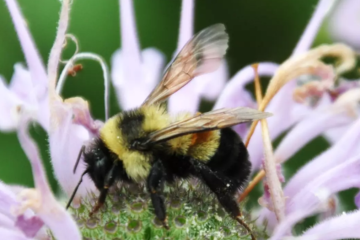

Honey bees have long fascinated scientists with their ability to organize complex societies without a leader. Inside a single hive, thousands of worker bees carry out specialized duties, from caring for the queen to defending the colony and foraging for food.
Now, researchers believe they may have discovered what determines those roles.
Scientists Identify a Hidden Neural Mechanism
A team of researchers from Heinrich Heine University Düsseldorf, working with colleagues from Cologne and Frankfurt, has identified a neural mechanism that appears to influence age-related job assignments in worker honey bees. Their findings were published in the peer-reviewed journal Proceedings of the National Academy of Sciences (PNAS).
The study focuses on a gene known as doublesex (dsx), which is active in specific brain cells. Researchers found that these neural circuits may act as biological switches that help determine whether a bee behaves like a nurse, hive worker, or forager.
Older Bees Began Behaving Like Younger Workers
Honey bee colonies generally follow a predictable pattern. Young worker bees spend their early lives caring for larvae and attending to the queen before transitioning to other responsibilities as they age.
However, scientists observed something unexpected.
After suppressing the activity of dsx-expressing neurons, older worker bees reverted to behaviors typically associated with younger bees. In several cases, they resumed queen-care duties despite having previously progressed to later-life tasks.
The findings suggest that social roles within a hive may be more flexible than previously believed and that changes in brain activity can significantly influence behavior.
Why the Discovery Matters
For decades, biologists have studied how honey bees coordinate their activities with remarkable efficiency. Understanding the mechanisms behind these behaviors could improve scientific knowledge of cooperation, social evolution, and insect biology.
Researchers say the discovery may also contribute to future studies involving ants, termites, and other highly social insects that rely on division of labor to survive.
The study arrives at a time when scientists are increasingly exploring the complexity of insect brains. Previous research has shown that honey bees possess specialized neural cells linked to learning, memory, and sophisticated social behaviors.
A New Look Inside the Bee Brain
The research has generated widespread interest because it challenges the long-standing assumption that a bee’s role is determined solely by age. Instead, scientists now believe that hidden neural pathways may play a significant part in organizing one of nature’s most efficient societies.
A detailed summary of the findings was also published by ScienceDaily, highlighting the potential implications for future studies on animal behavior and social organization.
As researchers continue investigating how these neural circuits interact, the tiny honey bee is once again proving that even the smallest brains can hold some of science’s biggest mysteries.
Editorial Note: This article summarizes findings from a peer-reviewed scientific study. WildlifeFree did not independently conduct the research and encourages readers to consult the original sources for additional details, methodology, and study limitations.