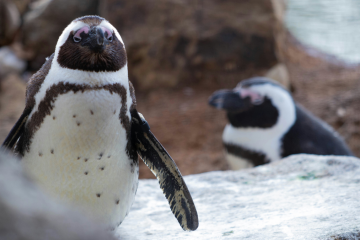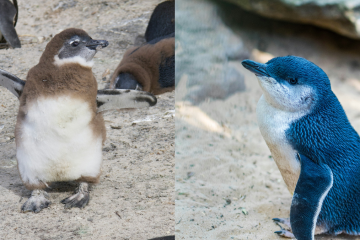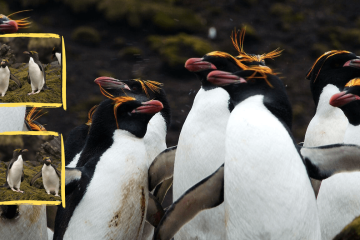
The fairy penguin, scientifically known as Eudyptula minor, is the smallest penguin species in the world. It is native to coastal regions of Australia and New Zealand.
But what makes this tiny penguin so unique compared to other species?
Not only is it smaller, but it also has distinctive blue feathers and a fascinating daily routine. In fact, it spends most of its day at sea and returns to land only after sunset.
What Is a Fairy Penguin?
Scientific Identity
- Scientific name: Eudyptula minor
- Family: Spheniscidae
- Common names: Fairy penguin, little penguin, little blue penguin
So, why is it called a “fairy” penguin?
The name comes from its small size and delicate appearance. However, scientists today prefer the term “little penguin”.
What Are Fairy Penguins Called Now?
Today, the species is widely referred to as the little penguin. Moreover, in Australia, a closely related species called Eudyptula novaehollandiae has also been identified.
Fairy Penguin Size and Physical Features
Size and Weight
So, how small is a fairy penguin exactly?
| Feature | Measurement |
|---|---|
| Height | 30–33 cm |
| Weight | 1–1.2 kg |
| Status | Smallest penguin |
Clearly, these measurements make them the tiniest members of the penguin family.
Appearance
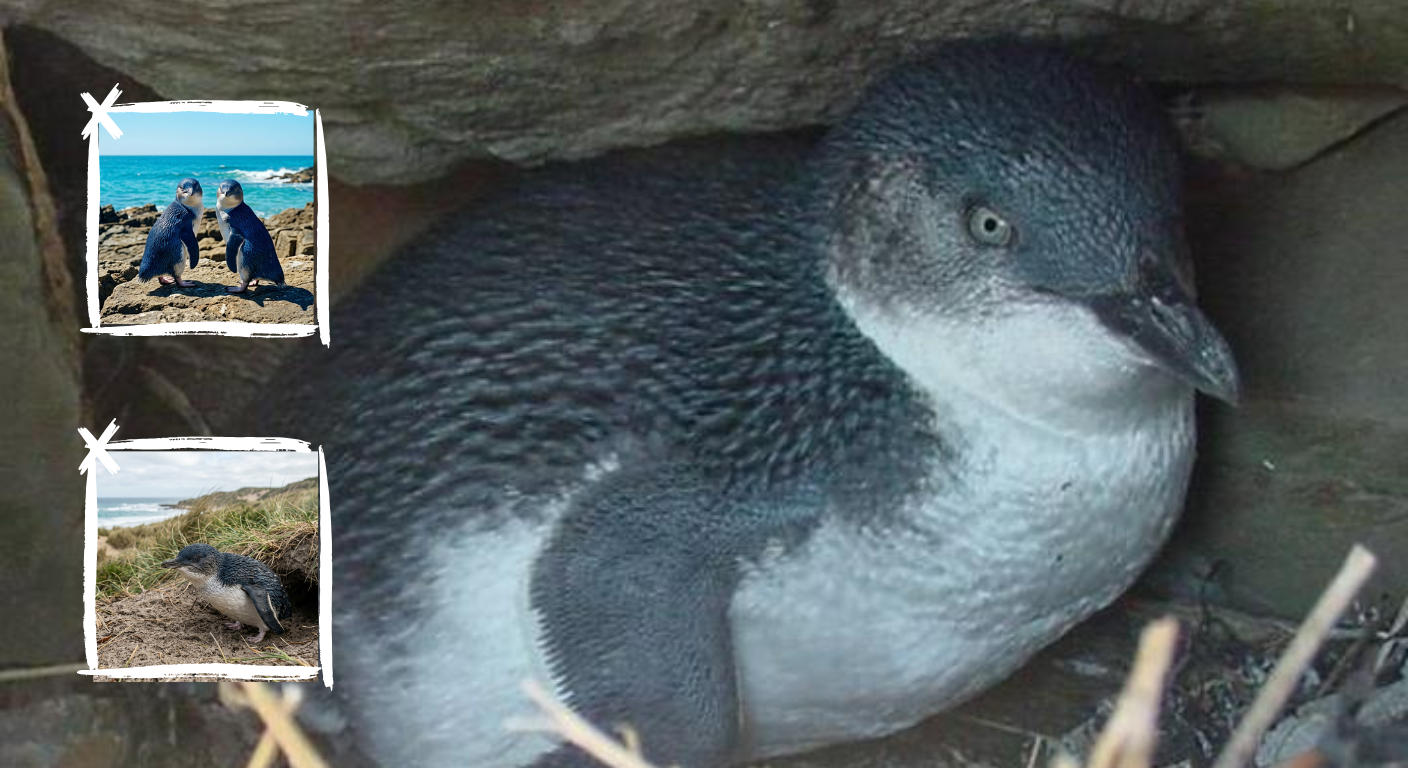
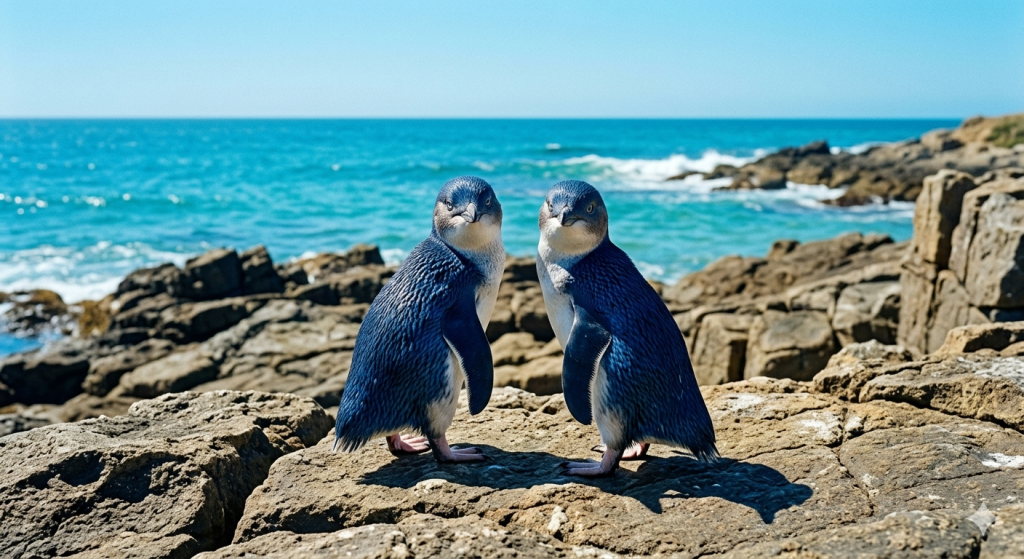
- Blue to slate-blue upper body
- White underside
- Short dark beak
- Pink webbed feet
In addition, their blue coloration acts as camouflage. For example, predators from above see dark water, while predators from below see light from the surface.
Lifespan
Typically, fairy penguins live around 6–7 years in the wild. However, under ideal conditions, they can live much longer.
Fairy Penguin Habitat and Distribution
Where Do Fairy Penguins Live?
Fairy penguins are found along coastal regions of:
- Australia
- New Zealand
But why do they prefer these locations?
Because these areas provide easy access to food and safe nesting sites.
Habitat Type
They typically live in:
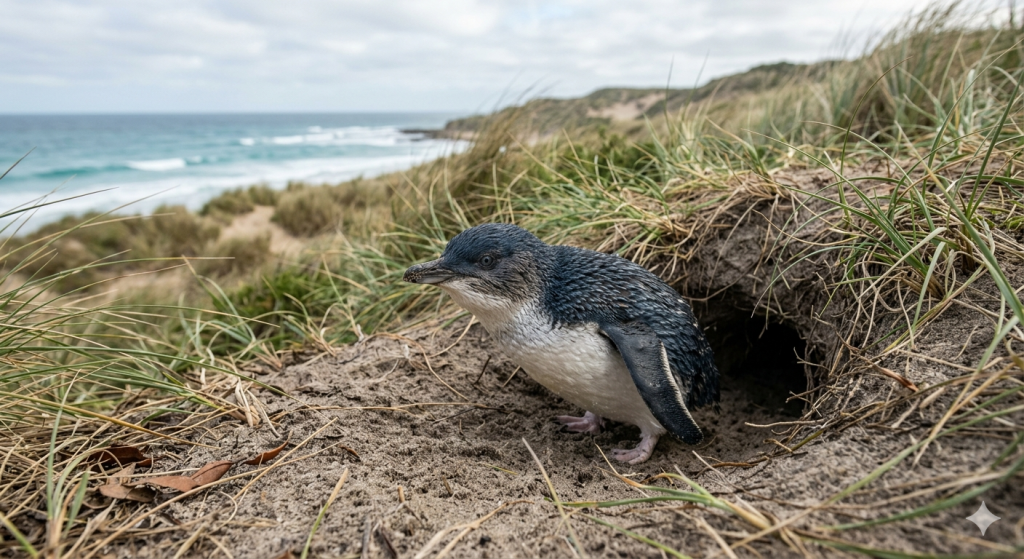
- Rocky coastlines
- Sandy beaches
- Coastal vegetation areas
Moreover, although they are seabirds, they rely heavily on land for nesting.
Nesting Behavior
- Dig burrows in sand
- Use rock crevices
- Hide under vegetation
Interestingly, they often return to the same nesting site every year, showing strong site loyalty.
What Do Fairy Penguins Eat?
Diet Overview
What exactly do fairy penguins eat in the wild?
| Food Type | Examples |
|---|---|
| Fish | Anchovies, sardines |
| Cephalopods | Squid |
| Crustaceans | Krill |
Hunting Behavior
- Dive underwater to catch prey
- Hunt during the day
- Dive up to ~60 meters
Therefore, they are highly efficient underwater hunters.
Feeding Patterns
In addition, fairy penguins usually hunt close to shore. After that, they return to land at night to feed their chicks.
Fairy Penguin Baby (Reproduction)
Breeding Facts
How do fairy penguins reproduce?
| Feature | Detail |
|---|---|
| Eggs | 1–2 |
| Incubation | 31–40 days |
| Fledging | 50–65 days |
Parenting
Both parents share responsibilities. For instance:
- One hunts for food
- The other guards the nest
As a result, this teamwork significantly increases chick survival.
Behavior and Lifestyle
Nocturnal on Land
Did you know fairy penguins are nocturnal on land?
They:
- Come ashore after sunset
- Leave before sunrise
This behavior helps them avoid predators. Therefore, they are rarely seen during the day on land.
Social Behavior
- Live in colonies
- Travel in groups
- Use vocal communication
Moreover, group movement provides safety from predators.
Swimming Ability
Because their wings act like flippers, they are excellent swimmers. In fact, swimming is their primary mode of movement.
Threats and Conservation
Main Threats
What dangers do fairy penguins face today?
- Predators (dogs, cats, foxes)
- Marine predators (seals, sharks)
- Pollution and oil spills
- Food shortages
Climate Impact
Furthermore, climate change is affecting ocean temperatures. As a result, food availability is becoming unpredictable.
Conservation Status
Currently, the species is classified as Least Concern. However, some populations are declining, which raises concern.
Final Thoughts
In conclusion, the fairy penguin is not only the smallest penguin but also one of the most fascinating. Because of its unique behavior, adaptability, and ecological role, it continues to capture the interest of scientists and wildlife lovers alike.
However, protecting their habitats is more important than ever. Therefore, conservation efforts must continue to ensure that these tiny penguins thrive in the future.
FAQs (People Also Ask)
Q: What are fairy penguins now called?
A: They are now commonly called little penguins, although the older name is still widely used.
Q: Can you keep a fairy penguin as a pet?
A; No. In fact, they are protected wildlife in Australia and New Zealand, making it illegal to keep them as pets.
Q: What is the height of a fairy penguin?
A: They typically grow to 30–33 cm, making them the smallest penguins.
Q: What do fairy penguins eat?
A: They mainly eat fish, squid, and crustaceans, which they catch by diving.
Q: Where can you see fairy penguins?
A: You can see them at famous colonies such as Phillip Island, where they return to shore at sunset.














Danianne Jansen – Content Writer & Animal Care Contributor
Danianne Jansen is a professional writer and educator with a strong background in storytelling and research-based content creation. With experience as an English and drama teacher, she brings clarity, structure, and depth to every article she writes.
At WildlifeFree, she contributes to pet care and animal-related content, focusing on simplifying complex information into easy, practical guides for everyday pet owners. Her writing approach combines research, readability, and real-world usefulness to help readers better understand animal care, behavior, and nutrition.
While her primary background is in writing and education, she is passionate about animals and dedicated to producing accurate, helpful, and engaging content that supports responsible pet ownership.
Her goal is to make reliable pet care knowledge accessible to everyone — whether they are beginners or experienced pet owners.